
7 Real Benefits of Squash for Women Over 50
Last Updated: October 28, 2026
Quick Summary
Squash for women over 50 builds bone density, heart health, blood sugar control and balance through weight-bearing, stop-start play. Play two to three times a week with at least one rest day between sessions, and get medical clearance first if you have low bone density or osteoporosis.
Warm up for ten minutes before touching a ball, including dynamic hip, calf and shoulder mobility.
Wear proper court shoes with good lateral support and non-marking soles.
If a joint is sore two days after a session, swap the next session for something low-impact.
Schedule strength training away from squash days so the same tissues are not loaded on consecutive days.
Court access runs from 6am to 11pm daily, with entry via a secure smartphone key through the SALTO app.
Table of Contents
Why Squash Suits Women Over 50 Better Than You Might Think
Squash is one of the most time-efficient ways to stay fit after 50, and it is enjoying a quiet revival among older players. If you are still weighing whether it is worth starting at your age, this guide to learning squash as an adult makes the case.
Here is the honest truth most fitness guides skip: the benefits of squash for women over 50 are not really about burning calories. They are about bone loading, balance, coordination and the kind of short, sharp effort that keeps your body guessing.
Physical activity guidelines for older adults
The Health Benefits of Squash for Women Over 50
The health benefits of squash for women over 50 centre on bone density, heart health, blood sugar control and balance. Squash is a weight-bearing, stop-start sport that loads your legs and hips repeatedly, which is exactly the kind of stress bone responds to. But the benefits are not automatic, and they are not unlimited. This section separates what is well established from what is plausible but unproven, and connects each benefit to the nutritional and hormonal changes that matter after 50.
Bone Density and Joint Loading
The caveat: if you already have low bone density or a diagnosis of osteoporosis, get medical clearance before starting, and ask whether the impact and twisting loads are appropriate for your situation. A physiotherapist or exercise physiologist can advise on modifications.
Heart, Blood Sugar and Weight Management
After menopause, cardiovascular risk rises and insulin sensitivity can decline, so regular vigorous activity is genuinely valuable. But the evidence for squash specifically in postmenopausal women is limited; most of what we know comes from general exercise science on interval training and aerobic activity. That is enough to justify playing, but not enough to promise a specific outcome. If you manage blood-sugar concerns or take medication that affects glucose, check with your clinician before adding high-intensity intervals, and monitor how you feel.
Balance, Coordination and Falls Prevention
A fair caveat: squash also carries a risk of falling or turning an ankle, so the net benefit depends on playing within your limits, warming up properly, and wearing suitable footwear. For women with significant balance impairment or a history of falls, a structured balance programme may be a safer starting point, with squash added later.
What Squash Does Not Do
Physical activity guidelines for older adults
Squash for Beginners Over 50: Starting Without Overdoing It
Before your first session, sort out your kit. A squash equipment guide for beginners covers the racket, ball, shoes and eyewear you actually need, without the upsell. If you are restarting after a long break, this safe return guide for players over 40 walks through warm-ups and gradual conditioning.

Squash Injury Prevention for Older Players
Build these habits into every session:
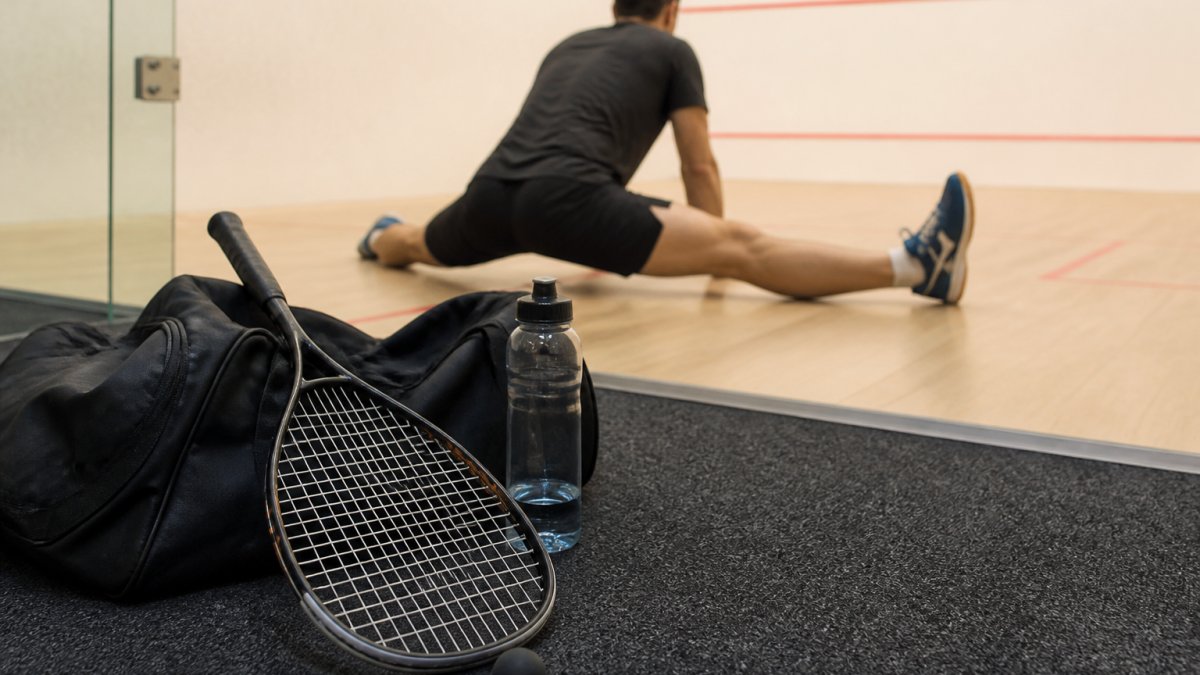
Warm up for ten minutes before you touch a ball, including dynamic hip, calf and shoulder mobility
Wear proper court shoes with good lateral support and non-marking soles
Stretch calves and hips afterwards, not before
Cut a session short if you feel a twinge, rather than pushing through
Load Management After 50
Tendons and joints recover more slowly with age, so the weekly load matters as much as the warm-up. A common pattern among returning players is a big first session followed by soreness for days. Better to play two shorter sessions than one long one, and to keep at least one rest day between sessions. If you are also doing strength training, schedule it away from squash days where possible so the same tissues are not loaded hard on consecutive days.
Health Conditions and Medication
Kidney disease: High-intensity exercise and hydration needs vary with kidney function; ask your clinician about appropriate intensity and fluid intake.
Blood-sugar concerns: If you take insulin or other glucose-lowering medication, vigorous interval exercise can affect blood sugar. Monitor before and after sessions and follow your care plan.
Blood pressure: If your blood pressure is poorly controlled, get clearance before starting vigorous activity.
Joint replacement or significant osteoarthritis: Ask whether squash's impact and twisting loads are appropriate, or whether low-impact alternatives should form the base of your activity.
Medications that affect balance or bleeding risk: Some medications cause dizziness or increase bruising risk; discuss with your prescriber.
How Often to Play Squash at 50 and Beyond
Playing squash two to three times a week is a sensible target for most women over 50, with at least one rest day between sessions. How often to play squash depends on your starting fitness, your recovery speed, and whether you are also doing strength work. Balancing these high-intensity court sessions with lower-impact alternative fitness activities like running helps maintain cardiovascular endurance while ensuring the body has sufficient time to adapt to the demands of regular exercise.
If you are planning a regular habit, it is worth checking what membership options suit your frequency. A comparison of senior and student membership rates explains eligibility and what each tier includes, so you can match the plan to how often you actually play.
Here is the frequency guidance the article sets out for playing squash after 50.
Item | Value | Note |
Target sessions per week | Two to three times a week | Sensible target for most women over 50 |
Rest between sessions | At least one rest day | Keep a rest day between sessions |
Warm-up before playing | Ten minutes | Dynamic hip, calf and shoulder mobility |
Strength training timing | Away from squash days | Avoid loading the same tissues on consecutive days |
Sore joint rule | Sore two days after a session | Swap the next session for something low-impact |
Court access hours | 6am to 11pm daily | Entry via secure smartphone key through the SALTO app |
Low-Impact Alternatives to Squash When Your Body Needs a Break
A simple rule we share with members: if a joint is sore two days after a session, swap the next session for something low-impact and see how it responds.
Book a Court and Find Your Own Rhythm
The hardest part of any return to sport is the first booking. Once you are on court, the rest follows.
Our online booking system lets you reserve a court, with access from 6am to 11pm daily. Entry is via a secure smartphone key through the SALTO app. And our membership options cover both casual players and regulars.
If you have been waiting for a sign to get back on court, this is it. Book a court online and find your own rhythm.
Frequently Asked Questions
Is squash a good sport for women over 50?
Yes, with the right approach. Squash builds bone density through weight-bearing movement, improves heart fitness and sharpens balance and coordination, all of which matter more after menopause. The key is starting at a manageable pace, warming up properly and choosing a court time when you are not rushed. Many women over 50 play socially once or twice a week and find it easier to stick with than gym sessions because the game itself keeps them moving.
How often should a beginner over 50 play squash?
Start with one session a week for the first month, then build to two if your body feels good the day after. Recovery takes longer in your fifties than it did in your twenties, so leave at least one rest day between games. If you are returning after a long break, treat yourself as a beginner again. Book a shorter court slot, focus on movement and technique rather than winning rallies, and increase frequency gradually rather than all at once.
Is squash a high-impact sport, and are there lower-impact alternatives?
Squash involves short bursts of running, lunging and changing direction, so it does load the joints. If that is a concern, low-impact alternatives include swimming, cycling, walking on an incline, and racquetball played at a gentler pace. Many players mix squash with swimming or cycling to keep the joint load balanced across the week. Speak to a physiotherapist if you have existing knee, hip or ankle issues before committing to regular court time.
What equipment do I need to start playing squash?
You need a squash racquet, non-marking court shoes and comfortable sportswear. Racquet handles come in different grip sizes, so hold a few before choosing one. Non-marking soles are essential on a squash court because black-soled runners leave scuff marks that the surface cannot absorb. Many centres lend racquets to new players, so ask before buying. A water bottle and a light warm-up layer round out the basics for a first session.
Squash after 50 is not about proving anything. It is about staying strong, steady and sharp for the decades ahead. Launceston Squash Centre makes that easy with flexible online bookings, self-service access through the SALTO app, and hours that run from 6am to 11pm every day. Get started with Launceston Squash Centre and play on your own schedule.

Comments