
Student vs Senior Squash Membership Rates
Table of Contents
Understanding Student vs Senior Squash Membership Rates
Squash Membership Eligibility: Student and Senior Categories
Student Membership Requirements
Senior Membership Requirements
Eligibility Verification and Renewal
What's Included in Squash Membership Fees
Court Access and Booking Privileges
Insurance and Liability Coverage
Coaching and Skill Development
Tournament and League Access
Hidden and Variable Costs
Student vs Senior Benefit Comparison
Squash Pay as You Go: An Alternative to Membership
How to Book Squash Courts and Access Your Membership
Which Membership Works Best for Your Playing Style
Frequently Asked Questions
Last Updated: October 10, 2026
Understanding Student vs Senior Squash Membership Rates
Choosing between student and senior squash membership rates depends on your eligibility and playing frequency. At Launceston Squash Centre, we offer flexible options for students, seniors, and casual players. Understanding what each membership category includes helps you select the right option for your needs and budget.
Squash Membership Eligibility: Student and Senior Categories
Eligibility rules vary across facilities. Understanding exact requirements and proof needed prevents rejection or delays.
Student Membership Requirements
Student membership requires full-time enrolment at an accredited institution. Proof includes a valid student ID, enrolment letter, or course registration screenshot.
Most facilities require full-time enrolment in a degree, diploma, or vocational qualification. Check your local centre's policy on part-time student eligibility before applying.
Student eligibility is verified annually at renewal. If you graduate, defer studies, or become ineligible, you may lose student pricing. Some facilities offer a 30-day grace period after graduation; others enforce the change immediately.
Proof requirements vary: some clubs accept digital ID via email, others require in-person verification. Ask whether your institution is on the club's approved list and what documents they accept to prevent activation delays.
Senior Membership Requirements
Senior membership eligibility typically begins at age 60, though some facilities set it at 65. Confirm the exact age requirement for your preferred facility.
Proof of age (driver's licence, passport, birth certificate, or Seniors Card) is required at registration. Unlike student verification, age proof is a one-time check unless your membership lapses for more than 12 months.
Some facilities offer early-bird senior rates for players aged 55-59, providing a stepping stone before full senior eligibility.
Geographic variation is notable: metropolitan clubs often set senior eligibility at 65, whilst regional facilities may use 60. If you're near a state border, check both sides for potentially lower rates.
Eligibility Verification and Renewal
Bring original proof documents to your first visit or upload digital copies during online registration. Most clubs process verification within 24-48 hours.
At renewal, student members must provide updated enrolment proof; senior members rarely need to re-verify age. Some clubs automate reminders; others require manual document uploads through their member portal.
If your eligibility changes mid-membership, notify your club immediately to avoid back-billing or suspension. Updating your status promptly ensures you benefit from any new discounts at renewal.
What's Included in Squash Membership Fees
Membership fees cover court access, but additional charges often apply. Understanding the headline fee, ancillary costs, and what each tier includes helps you calculate true affordability.
Court Access and Booking Privileges
All memberships include unlimited court booking rights. Most clubs allow online bookings in advance. Peak hours are usually included, though some facilities charge extra per peak-time slot.
Off-peak bookings (weekday mornings and early afternoons) are included at no additional cost. This is where student and casual players often find value: a weekday 2pm court slot costs the same as a 7pm slot under most membership models.
Court access typically extends to all courts at the facility. If the club operates multiple courts of different standards (for example, glass-backed show courts versus standard courts), membership usually grants equal access to all. Some premium facilities reserve their show courts for tournament play or charge a separate booking fee; confirm this when joining.
Insurance and Liability Coverage
Many memberships include player injury and public liability insurance as part of the membership fee. This coverage typically protects you if you're injured during play (medical expenses up to a stated limit) and covers your liability if you injure another player or damage facility property.
Insurance is rarely itemised as a separate line item on your invoice, but it's a material benefit. Check your membership agreement or ask the facility directly whether insurance is included, what the coverage limits are, and whether it extends to coaching sessions or tournaments.
Some facilities require you to opt into insurance; others include it automatically. If you have your own sports injury or public liability insurance (for example, through a workplace scheme or personal policy), you may be able to waive the club's coverage and receive a small fee reduction.
Coaching and Skill Development
Most memberships include a discount on coaching sessions off the standard pay-as-you-go rate. Some clubs offer members free group clinics or discounted access to skill-development workshops.
Senior memberships often include more extensive coaching benefits than student memberships, reflecting the expectation of regular play and higher engagement. Confirm the coaching discount structure when comparing memberships.
A few facilities offer members-only coaching packages, for example, four coached sessions per quarter at a bundled rate lower than booking individually. These packages are usually optional add-ons, not included in the base membership fee, but they represent significant savings if you're serious about improving your game.
Tournament and League Access
Membership typically grants priority or discounted entry to club tournaments, ladder competitions, and inter-club leagues. Entry fees for members are usually lower than non-member rates.
Some facilities restrict certain competitions to members only, particularly internal ladder systems or club championships. If you're interested in competitive play, this is a meaningful membership benefit.
Hidden and Variable Costs
Beyond the headline membership fee, budget for:
Court hire charges: Some facilities charge a per-court fee on top of membership. Confirm whether your membership includes court hire or whether it's charged separately.
Association fees: Membership in state or national squash bodies may be mandatory or optional. These fund insurance, competition organisation, and player development.
Peak-time surcharges: As noted above, some clubs charge extra for evening or weekend bookings.
Tournament entry fees: Whilst members receive a discount, entry still costs money.
Coaching: Discounted coaching is cheaper than pay-as-you-go, but it's not free.
Facility fees or annual levies: A few clubs charge an annual facility maintenance fee on top of membership, separate from the membership fee itself.
When comparing memberships, ask the facility for a complete fee schedule. Request a sample invoice showing the membership fee, court hire (if applicable), insurance, and any other recurring charges. This reveals the true all-in cost and prevents surprises at renewal.
Student vs Senior Benefit Comparison
Student memberships typically emphasise affordability and flexibility, with lower headline fees but fewer ancillary benefits. A student membership might include unlimited court access and a 15% coaching discount but exclude insurance or tournament entry discounts.
Senior memberships often bundle more benefits, insurance, higher coaching discounts (20-25%), priority tournament entry, and social events, reflecting the expectation of higher engagement and regular play. The headline fee is higher, but the total value (headline fee plus included benefits) may be comparable or better than student rates when you factor in avoided coaching and tournament costs.
Request a detailed benefits matrix from your club comparing student, senior, and standard adult memberships. This shows exactly what each tier includes and helps you calculate whether the higher senior fee delivers better value for your playing style.
Squash Pay as You Go: An Alternative to Membership
Not every player benefits from membership. Pay-as-you-go court access appeals to casual players who prefer flexibility over commitment. With this model, you book a court and pay for that session only, without membership obligations.
Pay-as-you-go pricing typically costs more per session than membership rates, reflecting the lack of advance commitment. However, if you play infrequently, perhaps once or twice monthly, this model eliminates the cost of unused membership benefits.
The trade-off is booking availability. Pay-as-you-go players often have lower priority for peak-time slots, meaning weekend mornings or weekday evenings may fill quickly. Off-peak hours (weekday afternoons, early mornings) usually offer more availability for casual bookings.
Access Model | Best For | Booking Priority | Typical Commitment |
Student Membership | Full-time students playing regularly | High (peak and off-peak) | Annual or semester-based |
Senior Membership | Players 60+ seeking consistent access | High (peak and off-peak) | Annual, often with renewal discounts |
Pay as You Go | Casual players 1-2 times monthly | Lower (off-peak preferred) | Per-session only |
How to Book Squash Courts and Access Your Membership
Booking courts at a modern squash facility has become straightforward through digital systems. At Launceston Squash Centre, our online booking platform allows members to reserve courts directly through our website or mobile app, selecting your preferred date, time, and court.
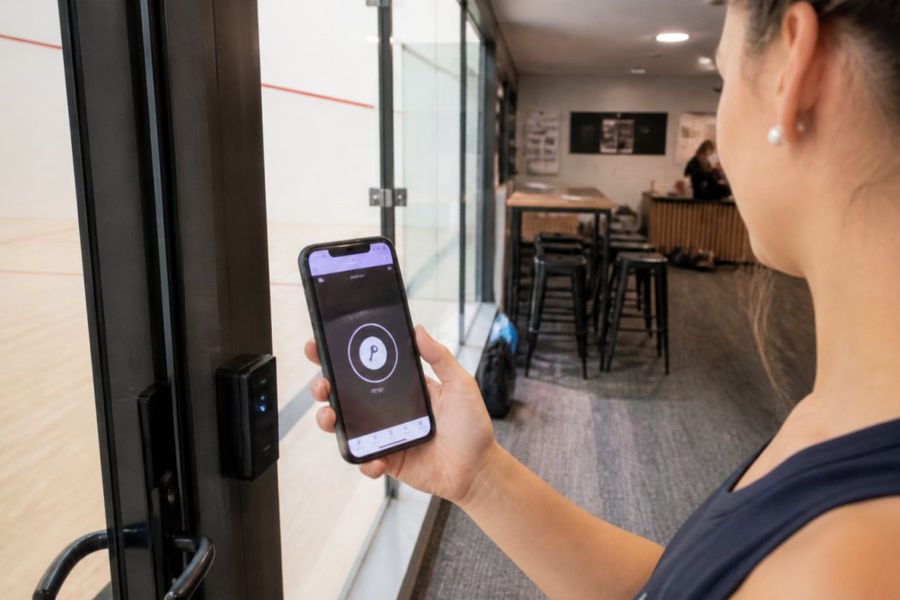
Once you've booked a court, entry is handled through our secure SALTO app-based key system. Rather than carrying physical keys or checking in at a desk, you unlock the facility using your smartphone. This self-service approach means you can arrive and play at any time within our operating hours, 6am to 11pm daily, without waiting for staff.
The smartphone key system requires a simple setup during membership registration. You'll download the SALTO app, link it to your membership account, and your phone becomes your access credential. This eliminates lost keys, forgotten access cards, and the need to coordinate with facility staff for after-hours play.
Which Membership Works Best for Your Playing Style
Your ideal membership depends on three factors: how often you play, your age or student status, and whether you value community and structured opportunities.
If you're a full-time student playing twice weekly or more, student membership offers clear value. The reduced rates combined with consistent court access make regular play affordable. Student membership suits players building competitive skills or those simply enjoying recreational squash alongside study commitments.
Senior membership appeals to players aged 60 and over who play regularly and want predictable access. Many seniors appreciate the community aspects, tournaments, clinics, and social events, that memberships often include. If you're retired or semi-retired with flexible time, senior membership typically pays for itself within a few months of regular play.
For casual players of any age, pay-as-you-go remains sensible. If you play fewer than four times monthly, membership fees may exceed what you'd spend on individual sessions. This model suits players returning to squash after a break, those with unpredictable schedules, or people testing whether squash fits their lifestyle before committing to membership.
Consider also the total cost picture. Beyond the headline membership fee, factor in any additional charges for coaching, tournaments, or premium court times. Some facilities offer introductory rates or trial periods, taking advantage of these lets you experience the facility and membership benefits before full commitment.
Choosing between student and senior squash membership rates comes down to matching your playing frequency and eligibility to the right access model. At Launceston Squash Centre, we've designed our membership structure to serve casual and committed players alike, with flexible online booking, extended daily hours from 6am to 11pm, and secure smartphone-based access via our SALTO app. Whether you're a student seeking affordable regular play or a senior wanting consistent court availability, our membership options remove barriers to enjoying squash on your schedule. Book online today and start playing within minutes of arrival.
Frequently Asked Questions
Is a student squash membership cheaper than a senior squash membership?
Student and senior squash membership rates differ based on age eligibility and the benefits each tier provides. Students typically qualify if enrolled full-time at a recognised educational institution, while seniors usually qualify at age 60 or 65 depending on the club. For current pricing and exact rates at your local facility, contact the club directly or visit their website, as rates vary by location and membership tier.
What proof is needed to qualify for a student or senior squash membership rate?
Most clubs require documentation to verify eligibility. Students typically need a valid student ID or enrolment letter from their educational institution. Seniors usually need to provide proof of age, such as a driver's licence or passport. Some facilities accept online verification through their registration system. Check with your club about their specific documentation requirements when applying for a membership category.
What is usually included in a squash membership?
Standard squash membership typically includes court access during operating hours, the ability to book courts in advance online, entry via a secure app or key system, and access to club facilities. Many memberships also provide discounted coaching sessions, access to club leagues and tournaments, and player insurance. Some tiers may include additional perks like priority booking or extended access hours. Review your club's membership benefits to see exactly what's covered.
Can you play squash without joining a club or paying a membership?
Yes, most squash facilities offer pay-as-you-go court booking options that allow casual players to book and play without a membership commitment. This approach suits players who only visit occasionally and don't want to commit to regular fees. However, membership often provides better value for players who visit weekly or more frequently, as the cost per session is typically lower. Compare your expected playing frequency against the membership fee to determine which option suits your needs.
Book Online


Comments