
Is Squash Worth Learning as an Adult: 2026 Guide
Table of Contents
The Verdict: Is Squash Worth Learning as an Adult?
Health Benefits of Squash for Adult Players
Cardiovascular fitness and aerobic capacity
Mental focus and psychological benefits for mid-life players
Squash for Beginners: Tips to Master the Fundamentals
Solo practice drills to build court movement and ball control
Overcoming the learning curve: what to expect in your first months
Alternatives to Squash for Low-Impact Exercise
Financial Investment Breakdown: What You'll Actually Spend
Injury Prevention and Recovery Protocols for Over-30s
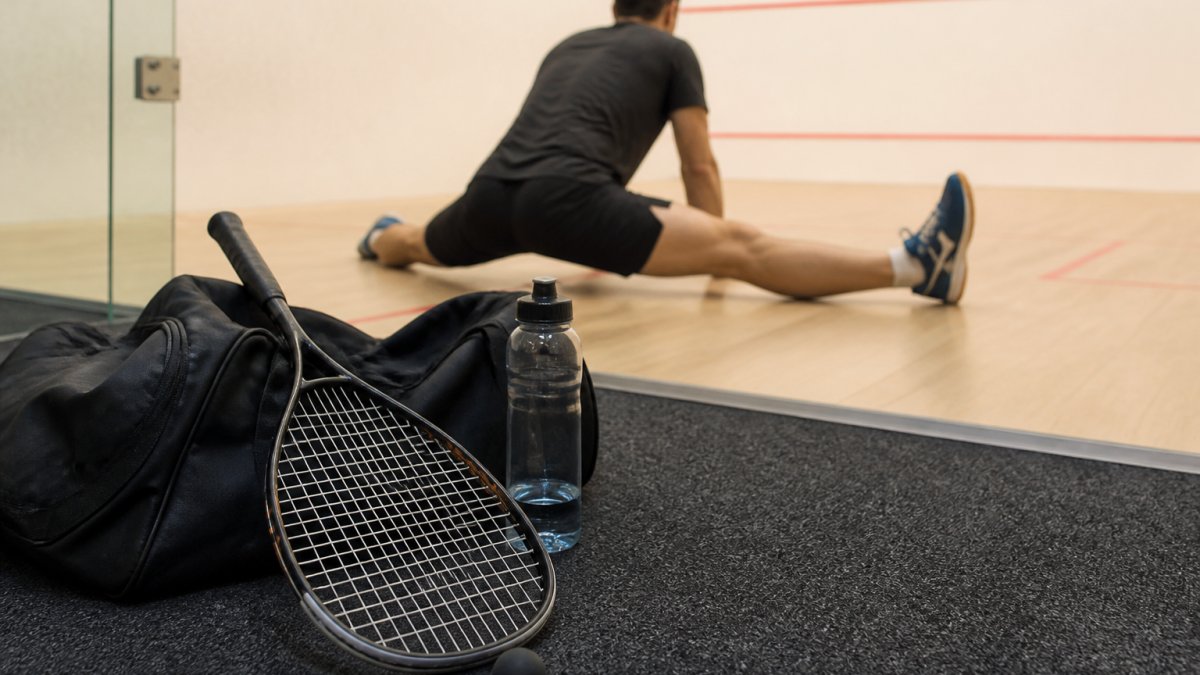
Warm-up and cool-down routines specific to squash
Flexibility and joint health for adult players
Finding Your Local Club and Building Community
Conclusion: Your Path to Starting Squash
Frequently Asked Questions
Last Updated: October 1, 2026
The Verdict: Is Squash Worth Learning as an Adult?
Yes, is squash worth learning as an adult. Most assume it's a young person's game with a steep learning curve and high injury risk. The reality: squash delivers measurable cardiovascular improvements, mental sharpness, and genuine community for adults willing to invest 8-12 weeks into fundamentals.
It requires proper equipment, court access, and realistic expectations about the first few months. If you want genuine fitness results, mental engagement, and real friendships, the investment pays off.
The sport demands precision, not just athleticism. You're learning a new motor skill while building aerobic capacity, unlike running or cycling, where effort alone suffices. This complexity keeps your brain active while your body works hard.
Health Benefits of Squash for Adult Players
Cardiovascular fitness and aerobic capacity
Squash is one of the highest-intensity racket sports. A single match involves explosive movements, rapid direction changes, and sustained effort. Most players experience noticeable cardiovascular improvements with regular play.
Intensity varies by opponent strength. Casual play builds aerobic fitness steadily; competitive matches trigger HIIT effects, short bursts of maximum effort followed by brief recovery, which improves both aerobic and anaerobic capacity.
Court movement demands constant acceleration, deceleration, and direction changes. This engages more muscle groups than steady-state cardio and burns more calories per minute than jogging. Adults playing regularly typically see resting heart rate improvements and better stamina.
The intensity is self-regulating: play stronger opponents for higher demand, or control pace in social matches. This flexibility lets adults build fitness at their own tempo.
Mental focus and psychological benefits for mid-life players
Squash demands sustained mental focus: tracking ball position, anticipating opponent movement, planning shots, and adjusting strategy mid-rally. This combination creates genuine "flow state" where external stress fades.
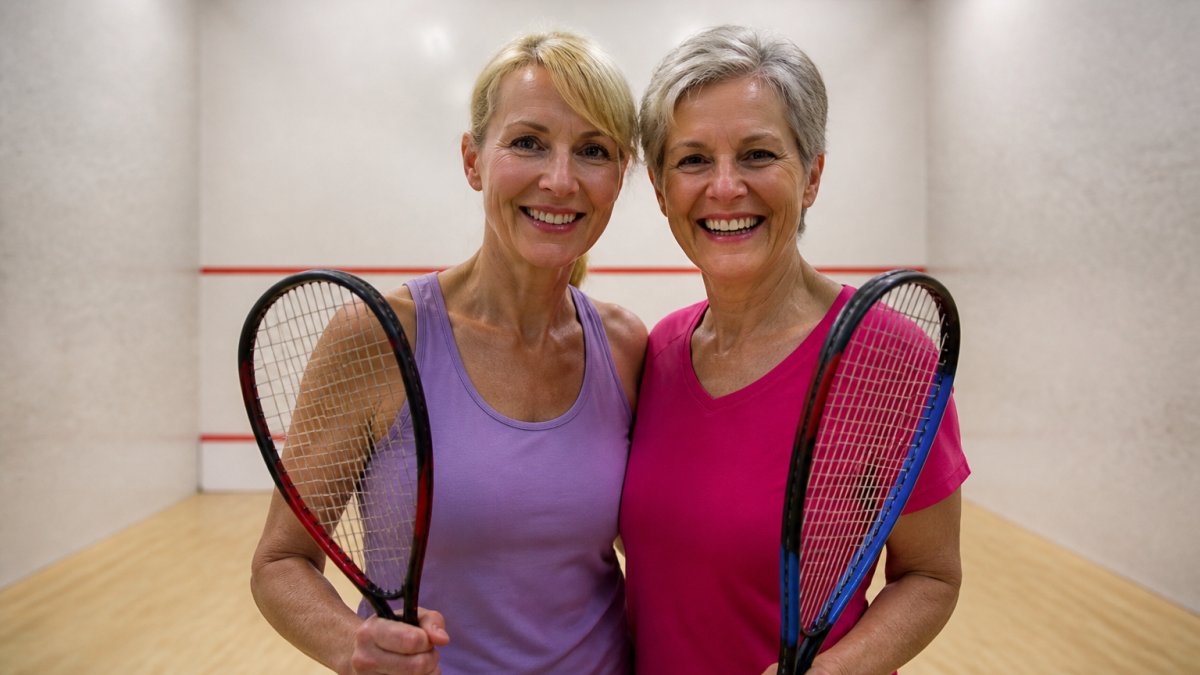
For adults in their 40s, 50s, and beyond, this mental engagement offers psychological benefits beyond fitness. The sport requires presence, no room for work stress or distractions when chasing a fast-moving ball. Players consistently report mental clarity and stress relief, with added physical exertion.
The social component amplifies these gains. Unlike solitary exercise, squash connects you with opponents and club members in a community with shared goals. This addresses key mid-life wellbeing factors: purpose, competence, and belonging.
Pro Tip The learning curve itself is psychologically valuable. Mastering new skills in mid-life strengthens cognitive resilience and confidence. Adults who stick with squash report improved self-efficacy that extends beyond the court.
Squash for Beginners: Tips to Master the Fundamentals
Solo practice drills to build court movement and ball control
Solo drills, hitting the ball against the wall repeatedly, build foundational skills: racket control, footwork, and court positioning. Most beginners learn the sport through drills, not competitive matches.
Start with basic wall drills: hit the ball straight at the wall from mid-court, letting it bounce once before hitting again. Focus on consistent contact and smooth rhythm rather than power. Most beginners spend time on wall drills before match play.
Footwork drills are equally important: move to the ball, plant your feet, hit, recover to center court. Repeat for 10-15 minutes. This builds court movement and agility that separates beginners from intermediate players.
Ball control drills target accuracy: set targets on the wall and practice placing the ball consistently. This develops hand-eye coordination and precision. Start at slow pace, focusing on accuracy over speed.
Most solo drills take time. Consistent sessions combined with match play can create skill development. Fundamentals can solidify enough that match play becomes enjoyable.
Overcoming the learning curve: what to expect in your first months
The first month is humbling: you'll miss balls, struggle with footwork, and feel uncoordinated. This is normal. Squash has a steep learning curve because you're developing a new motor skill (the racket swing) while managing court movement and tactical thinking simultaneously.
Expect the initial weeks to feel awkward: sore arms and legs, losing most rallies. This is where some people quit, assuming they're "not good at squash." In reality, you're building neural pathways. This takes time.
With consistent practice, a shift happens: the swing becomes more automatic, feet move more instinctively, and rallies last longer. This is a breakthrough point where squash stops feeling impossible.
The psychological challenge is staying committed through the first month. Expect frustration, losses, and muscle aches. Players who commit to consistent practice often break through; those expecting immediate competence may quit.
Watch Out Pushing too hard in the first month increases injury risk. Your body hasn't adapted to the explosive movements yet. Focus on technique and consistency, not power and winning. Save the competitive intensity for month 3 onwards.
Alternatives to Squash for Low-Impact Exercise
If you have joint issues, previous injuries, or prefer lower-impact options, several alternatives deliver similar cardiovascular and mental benefits.
Badminton shares squash's hand-eye coordination demands with lower impact. The pace is slower, court larger, movements less explosive. You build fitness and agility without joint stress, with a gentler learning curve.
Swimming provides excellent cardiovascular conditioning with zero impact. It engages more muscle groups than squash but lacks the competitive, social, and tactical elements that make squash engaging. Swimming is solitary; squash is interactive.
Cycling builds cardiovascular fitness without impact, with minimal learning curve. The tradeoff: it doesn't develop hand-eye coordination, agility, or complex motor skills that squash demands.
Tennis offers similar benefits with slightly lower intensity and a larger court. If you prefer outdoor play and larger court movement, tennis may suit you better.
Pickleball has exploded in popularity among older adults. It's played on a smaller court with a larger paddle and slower ball, with a much gentler learning curve and lower injury risk. For adults prioritising accessibility over intensity, pickleball is a genuine alternative.
Choose based on priorities: squash for maximum cardiovascular benefit despite a steep learning curve; alternatives for lower impact or faster competence.
Financial Investment Breakdown: What You'll Actually Spend
Equipment costs: beginner racquet ($80 AUD), court shoes ($120 AUD), protective eyewear ($45 AUD), squash balls ($8 AUD per pack). Budget for a complete starter setup.
Court access typically ranges $15-25 per court hour. Playing twice weekly costs roughly $120-200 AUD monthly. Many facilities offer membership discounts. At Launceston Squash Centre, flexible membership options accommodate casual and frequent players; contact the facility directly for current rates.
Coaching is optional but valuable. Group sessions cost $30-50 AUD; one monthly session accelerates skill development. Private coaching runs $50-80 AUD per hour but isn't necessary.
Total first-year cost for twice-weekly play: equipment ($300) + court access ($2,000-2,500) + optional coaching ($300-500) = approximately $2,600-3,300 AUD, or $50-65 weekly.
Squash delivers variety, social interaction, and mental engagement.
The investment is significant but not prohibitive. The real question is whether you'll commit long enough to recoup it through enjoyment and fitness gains.
Injury Prevention and Recovery Protocols for Over-30s
Warm-up and cool-down routines specific to squash
Squash demands explosive movement, which stresses joints and muscles. A proper warm-up prepares your body for this intensity and significantly reduces injury risk.
Start with 5-10 minutes of light aerobic activity (jogging on the spot, jumping jacks, shuttle runs). Then move into dynamic stretching: leg swings, arm circles, torso rotations, and walking lunges.
Hit easy shots against the wall for 5-10 minutes, gradually increasing intensity.
Key Takeaway The difference between adults who stay injury-free and those who get hurt often comes down to warm-up and cool-down discipline. Skipping these costs you 2-3 weeks of recovery when injury strikes.
Flexibility and joint health for adult players
Squash stresses ankles, knees, hips, and shoulders. Maintaining flexibility and joint health prevents chronic pain and extends your playing years.
Finding Your Local Club and Building Community
Joining a club transforms the experience. Clubs provide structure, community, and progression pathways that keep you engaged long-term.

Conclusion: Your Path to Starting Squash
Learning squash as an adult is absolutely worth it if you commit to the fundamentals and accept the initial learning curve. The sport delivers measurable cardiovascular improvements, genuine mental engagement, and real community. The first 8-12 weeks are challenging, but they're also the gateway to years of enjoyment.
Frequently Asked Questions
What are the primary health benefits of playing squash for adults?
Squash delivers high-intensity cardiovascular work in short bursts, building aerobic capacity and anaerobic threshold. The constant court movement improves agility and hand-eye coordination. Players typically experience better mental focus and reduced stress. For adults, the sport strengthens core stability and leg muscles. Players can report improved fitness with regular play.
How difficult is the learning curve when starting squash as an adult beginner?
The basic swing mechanics take time to develop with consistent practice. Beginners often struggle with court positioning and anticipation initially, but these can improve faster than racquet technique. Solo drills focusing on wall practice and footwork accelerate progress. Many adults find squash easier to learn than tennis because the court is smaller and rallies develop more naturally. Expecting a few months before playing enjoyable social matches is realistic.
What equipment do I need to start playing squash as an adult?
Essential gear includes a beginner racquet, non-marking court shoes, protective eyewear, and beginner-level squash balls. Many clubs provide ball access via membership. Avoid professional-grade equipment initially; beginner-specific gear is designed for easier learning. Comfortable athletic clothing and a water bottle complete the setup. Total startup cost for quality gear is modest compared to other racquet sports.
Can I play squash casually once or twice a month, or do I need a regular commitment?
Casual play is absolutely viable and many adults enjoy squash this way. However, fitness and skill improvements require consistency, playing weekly produces visible results, while monthly play maintains basic enjoyment without advancing technique. Flexible membership options accommodate sporadic schedules. Social play at any frequency delivers stress relief and community connection, even if competitive improvement isn't the goal. Choose a facility with pay-per-session options if monthly play suits your lifestyle better.
Is squash a high-impact sport that might injure someone over 30?
Squash involves rapid directional changes and explosive movements, making it moderate to high impact. However, injury risk is manageable with proper warm-up, cool-down, and flexibility routines. Adults over 30 should prioritise lateral stability exercises and gradual progression rather than intense match play immediately. Wearing proper court shoes with lateral support and eyewear prevents common injuries. Recovery protocols, stretching, rest days between sessions, and listening to your body, significantly reduce injury risk for older beginners.
Book Online

Comments