
Alternatives to Gym Memberships for Cardio: 7 Options
Table of Contents
Why Look Beyond the Gym for Cardio?
1. Squash and Racquetball: The Benefits of Squash for Cardiovascular Health
2. Cardio Exercises at Home: No Gym Required
Progressive Overload Without Equipment
A Four-Week Progression You Can Copy
3. Racquetball Court Access: Flexible and Affordable
4. Outdoor Cardio: Walking, Running, and Cycling
5. Community Sport and Group Fitness
6. Tech-Enabled Tracking for Home Workouts
Replacing Gym Metrics With What You Already Own
Building a Free Progress Log
Where VR Fits
7. How to Choose Your Best Alternative to Gym Memberships for Cardio
Frequently Asked Questions
Last Updated: September 28, 2026
Why Look Beyond the Gym for Cardio?
Gym memberships lock you into a contract, a commute, and someone else's timetable. That is the core problem with them, and it is why so many people quietly stop going within a few months of signing up. The people who stick with cardio are the ones who control when and where it happens.
1. Squash and Racquetball: The Benefits of Squash for Cardiovascular Health
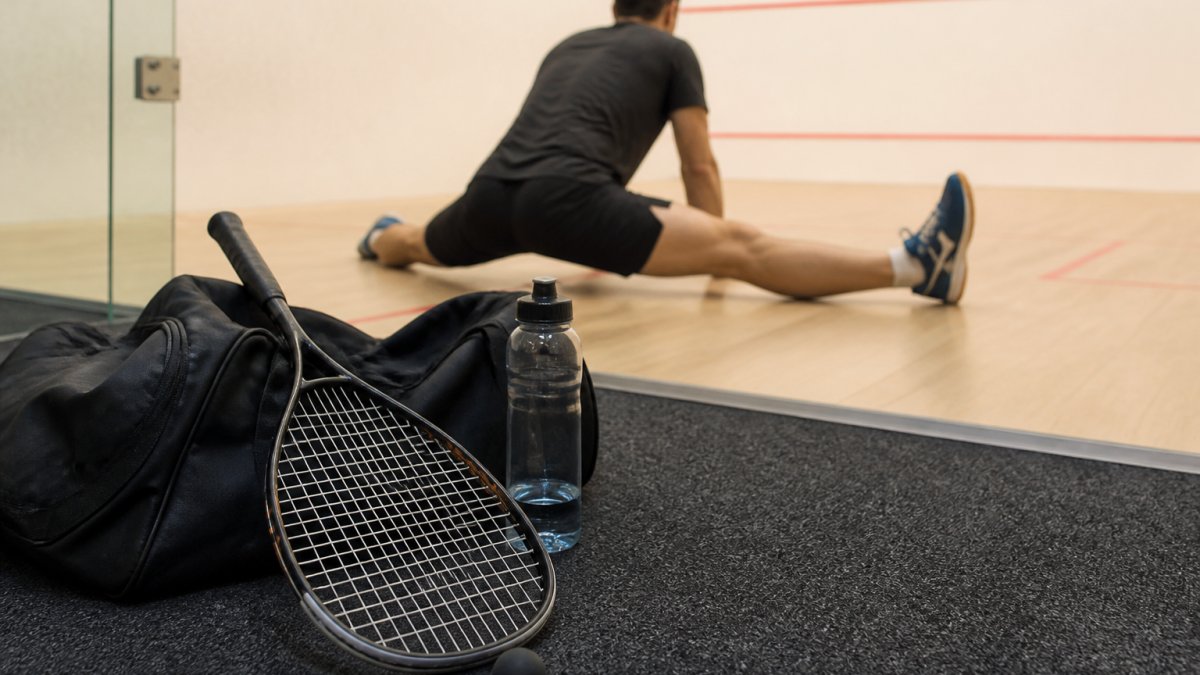
Squash is one of the most efficient cardio workouts you can do in under an hour. A rally-heavy game keeps your heart rate elevated in short, repeated bursts, which is exactly the pattern interval training uses on purpose. You get the benefits without designing a program.

Pro Tip Book a court with someone at a similar level for your first few sessions. A mismatched opponent turns a great workout into twenty minutes of picking up the ball, and you will not go back.
2. Cardio Exercises at Home: No Gym Required
Home cardio works if you pick two or three movements and actually repeat them. The failure mode is not lack of equipment. It is variety paralysis: too many options, no routine.
A simple weekly structure for home cardio:
Pick three movements you can do without thinking.
Work 40 seconds, rest 20 seconds, repeat for 15 to 20 minutes.
Add one movement each week once the session feels easy.
Track your reps or rounds so you can see progress.
Progressive Overload Without Equipment
This is the part most home-cardio guides skip, and it is the reason people plateau after a month. In a gym, the machine adds resistance for you. At home, you have to add difficulty deliberately. There are five levers, and you only need to pull one at a time:
Volume. Add one more round or one more minute to the session. Going from 15 to 20 minutes is a real increase in work.
Density. Keep the same work but cut the rest. Moving from 40 seconds on / 20 off to 45 on / 15 off raises the average heart rate without adding time.
Tempo. Slow the lowering phase of a squat or lunge to three seconds. The muscle spends longer under tension, so the same rep is harder.
Range. Take a lunge deeper, a push-up lower, or a squat to full depth. More range means more work per rep.
Complexity. Swap a two-foot squat for a split squat, or a standard push-up for a decline version. Harder variations recruit more muscle.
A Four-Week Progression You Can Copy
Week | Session | Work / Rest | Lever Used |
1 | 3 movements, 4 rounds | 40s / 20s | Baseline |
2 | 3 movements, 5 rounds | 40s / 20s | Volume |
3 | 3 movements, 5 rounds | 45s / 15s | Density |
4 | 3 movements, 5 rounds | 45s / 15s, slow tempo | Tempo |
Pro Tip If you can hold a conversation easily through the whole session, it is not hard enough. If you cannot speak a full sentence, back the pace off slightly. Moderate intensity sits between those two.
3. Racquetball Court Access: Flexible and Affordable
A court booking lets you play for an hour and leave, with no lock-in and no direct debit.
Watch Out The most common mistake with casual court bookings is showing up without confirming the slot. Popular times fill fast after work and on weekends, so book ahead rather than driving over and hoping.
4. Outdoor Cardio: Walking, Running, and Cycling
Outdoor cardio is free, needs no booking, and fits around almost any schedule. Brisk walking is the most underrated option on this list. It counts as moderate-intensity aerobic activity, it is low-impact, and almost anyone can start today.
5. Community Sport and Group Fitness
Community sport solves the motivation problem that solo cardio cannot. When other people expect you on a Tuesday night, you show up. That accountability is worth more than any app reminder.
6. Tech-Enabled Tracking for Home Workouts
Wearable trackers and apps turn a scattered home routine into something you can actually measure. Heart rate monitoring tells you whether a session was genuinely hard or just felt hard. That feedback is what keeps workout consistency from quietly collapsing.
Replacing Gym Metrics With What You Already Own
You do not need a subscription. You need three data points and a way to log them.
Heart rate zones. Most phones and watches estimate your maximum heart rate as roughly 220 minus your age, then split effort into zones. Moderate intensity is about 64-76% of that maximum; vigorous is roughly 77-93%. If your watch shows zones, aim to spend most of a session in the moderate band and a few short blocks in vigorous. If it does not, the talk test is a decent stand-in: you can speak in short sentences at moderate intensity but not hold a conversation.
Step count and distance. Your phone already counts steps. A brisk walk at roughly 100 steps per minute is a reasonable proxy for moderate intensity for most adults (pubmed.ncbi.nlm.nih.gov). Log the daily total rather than chasing a single big day.
Session duration. The national guideline target is 150 to 300 minutes of moderate activity a week. A simple timer app that logs minutes is enough to check you are on track.
Building a Free Progress Log
A spreadsheet or a notes app is sufficient. Four columns: date, activity, minutes, and one effort score out of 10. Once a week, look at the totals.
If weekly minutes are flat for two weeks, add a round or cut rest (the same levers from the home-cardio section).
If effort scores are creeping up while minutes stay the same, you are adapting, that is a good sign, not a bad one.
If effort scores are falling and minutes are falling, that is the early warning that consistency is slipping. Address it before you miss a second week.
Where VR Fits
For people who find traditional cardio dull, virtual reality fitness apps gamify the whole thing. Movement tracking scores your effort in real time, and the game hides the fact that you have been moving for half an hour. The trade-off is space and cost: you need a clear area roughly two metres by two metres, and a headset is a one-off purchase rather than a free download.
Watch Out The honest limitation: tech tracks, it does not motivate. A tracker will happily record a month of zero sessions. Use it to confirm progress, not to replace the habit itself.
Key Takeaway The gym's real advantage was never the equipment, it was the feedback. Heart rate, minutes, and a weekly log rebuild that feedback for nothing. If you can see the numbers move, you can progress without a single machine.
7. How to Choose Your Best Alternative to Gym Memberships for Cardio
Choose based on three things: how often you will realistically play, whether you need other people to show up, and how much space you have. Everything else is noise.
Work through this before you commit to anything:
Count your actual sessions last month, not your intended ones.
Decide whether you need a fixed time and other people, or total flexibility.
Measure your available space at home in metres.
Set a monthly budget and check it against pay-per-session pricing.
Pick one option and commit to it for four weeks before switching.
Option | Best For | Space Needed | Commitment |
Squash or racquetball | Players who want intensity and a game | None at home | Per session or membership |
Home bodyweight circuit | Tight schedules, small spaces | About 2 square metres | None |
Walking, running, cycling | Beginners, low-impact needs | None | None |
Community sport | People who need accountability | None | Seasonal fixtures |
VR fitness | Anyone bored by standard cardio | A clear 2 by 2 metres | One-time purchase |
Frequently Asked Questions
How can I get a good cardio workout without a gym?
You can get a solid cardio workout without a gym by using bodyweight exercises at home, playing racquet sports like squash, or doing outdoor activities such as brisk walking or cycling. For example, a 30-minute squash session can raise your heart rate and improve stamina. Many people find that a mix of home workouts and community sports keeps them consistent and motivated.
What are the most effective home-based cardio exercises?
Effective home cardio includes jumping jacks, high knees, burpees, and jump rope. These require minimal space and no equipment. You can also try interval training: alternate 30 seconds of high-intensity exercise with 30 seconds of rest. This approach boosts cardiovascular endurance and burns calories efficiently. Consistency matters more than duration, so aim for short daily sessions.
Is playing racquet sports like squash good for cardio?
Yes, squash is excellent for cardiovascular health. It involves constant movement, quick direction changes, and bursts of high intensity. This improves heart health, stamina, and agility. Regular play can also help lower resting heart rate and support weight management. Many players find it more engaging than solo gym workouts, which helps with workout consistency.
How much cardio do I need per week for health benefits?
Health guidelines recommend at least 150 minutes of moderate-intensity aerobic activity or 75 minutes of vigorous activity per week. You can split this into 30-minute sessions five days a week. Activities like brisk walking, squash, or home interval training all count. Even short bouts of 10 minutes can add up. Always build up gradually to avoid injury.
Can I improve my cardiovascular health without expensive equipment?
Absolutely. Bodyweight exercises, outdoor walking or running, and community sports require little to no equipment. A jump rope is a low-cost option, and many parks have free outdoor gyms. The key is regular physical activity that raises your heart rate. You can also use household items like water bottles for resistance during cardio circuits.
Most people do not quit cardio because they lack discipline. They quit because the option they chose did not fit their week. Launceston Squash Centre was built around that problem: courts you book online, entry through the SALTO app on your smartphone, and doors open from 6am to 11pm daily. Membership plans suit both casual players and regulars, so you are not paying for access you will not use. Book online with Launceston Squash Centre and get a game in this week.
Book Online


Comments