
Cost of Returning to Squash: Equipment Guide
Table of Contents
What You Need to Start Playing Squash Again
Essential gear vs optional accessories
Inspecting and Reusing Your Old Equipment
When replacement is necessary
Squash Membership Costs and Court Hire Rates
Casual vs frequent player options
Choosing the Right Racket: Weight, Balance, and Frame
What each budget tier actually buys
How to shortlist a racket in the shop
Squash Shoes for Indoor Courts and Court Grip
Squash Racquet Restringing Cost and Maintenance
When to restring versus replace
A simple maintenance routine
Complete Return-to-Play Budget by Player Level
Casual monthly players
Frequent players and enthusiasts
Ongoing and Hidden Costs to Plan For
Frequently Asked Questions
Returning to squash doesn't have to be expensive or complicated. Start with the essentials: a racket, shoes, eyewear, and a ball. Inspect old gear before buying new. At Launceston Squash Centre, we make it simple with flexible membership options, online booking via the SALTO app, and extended hours from 6am to 11pm daily. Whether you're playing casually once a month or three times per week, our self-service system adapts to your schedule. Book online today and get back on court.
Last Updated: October 18, 2026
What You Need to Start Playing Squash Again
Returning to squash equipment after time away means deciding what gear you actually need versus what's optional. The essential items are straightforward: a racket, shoes designed for indoor courts, protective eyewear, and a squash ball. Everything else depends on how serious you're getting and how often you'll play.

Essential gear vs optional accessories
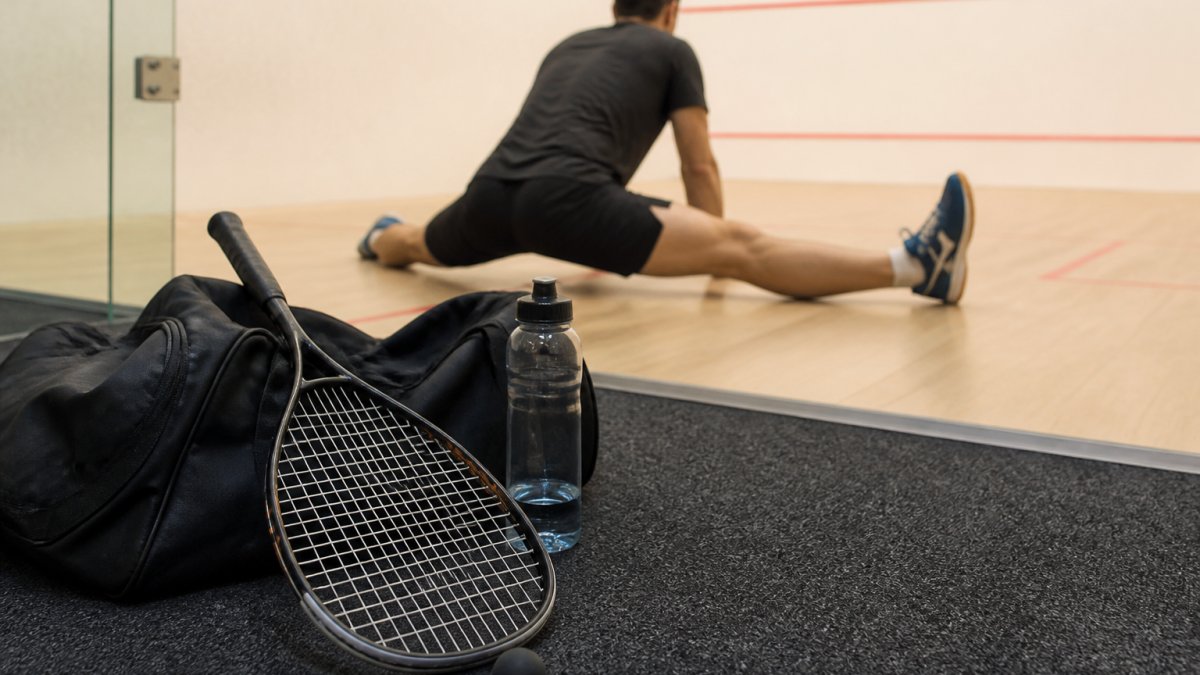
Your core setup requires four things. A racket gives you the tool to play, this is your biggest investment. Squash shoes for indoor courts are non-negotiable because they have non-marking soles that protect the court surface and give you grip without slipping. Protective eyewear prevents serious eye injuries from the ball and other players' rackets. A squash ball completes the basics.
Beyond these essentials, you'll consider:
Replacement grip tape for your racket handle
A sports bag to carry gear
Court clothing (shorts and a shirt that move freely)
Wristbands or sweatbands
Many returning players ask whether they need a membership or can just pay per session. That depends on how often you'll play and what flexibility matters to you. At Launceston Squash Centre, we offer both casual booking and membership options, so you choose what fits your schedule.
Pro Tip If you're unsure about commitment, start with casual pay-per-session bookings. You'll quickly discover whether you play once a month or three times a week, that tells you whether a membership saves money.
The real cost difference between a casual player and a regular one isn't just court hire. It's the supporting gear: replacing grips, buying new shoes when the soles wear, and eventually investing in a better racket as your skill improves.
Inspecting and Reusing Your Old Equipment
Before returning to squash equipment by buying new gear, check what you already own. Old rackets often play fine if the frame isn't cracked and the strings aren't broken. Shoes might still work if the soles grip properly and haven't worn smooth.
When replacement is necessary
Racket frame damage means the racket is done. Small cracks spread quickly under court pressure.
Shoe soles matter more than you'd think. Smooth, slippery soles are a safety hazard and give you no grip. If the soles are worn flat, replace them. New shoes are cheaper than a court injury.
Grip tape deteriorates over time. If the grip feels sticky, slippery, or cracked, peel it off and wrap new grip tape around the handle.
Protective eyewear should be replaced if the lenses are scratched, the frame is cracked, or the fit is loose. Old eyewear won't protect you properly.
Most returning players find that one or two pieces of old gear are salvageable, and one or two need replacing. The inspection takes ten minutes and saves money on items you don't actually need to buy new.
Watch Out Don't play with a cracked racket frame or smooth-soled shoes. Both are safety risks. A cracked frame can break mid-rally, and smooth soles cause slips that lead to injuries.
Squash Membership Costs and Court Hire Rates
Court hire rates vary depending on whether you book casually or commit to a membership. Casual bookings let you pay per session without ongoing commitment. Memberships bundle multiple sessions at a lower per-session cost if you play regularly.
Cheeky Monkey Squash
Casual vs frequent player options
Casual players typically book one or two sessions per month. Paying per session works out fine, you avoid membership fees and play only when you want.
Frequent players book two or more times per week. A membership usually saves money compared to paying per session each time.
At Launceston Squash Centre, we provide flexible membership options designed for both casual and dedicated players.
The choice between casual and membership comes down to your playing frequency and how much flexibility matters to you. If you're not sure, start casual and track how often you actually play over two months.
Best For Casual players who want flexibility without commitment should stick with pay-per-session bookings. Frequent players (3+ times per week) see real savings with a membership.
Choosing the Right Racket: Weight, Balance, and Frame
A good racket matches your playing style and strength. Racket weight affects how you swing and how much control you have.
Lighter rackets (around 120-130 grams) suit players who want fast swings and less arm fatigue. Heavier rackets (140+ grams) give more power and stability but demand more strength.
Racket head shape influences your hitting area. A larger head gives a bigger sweet spot and forgives mis-hits. A smaller head offers more control but demands accuracy.
Racket frame materials matter for durability and feel. Graphite frames are common and reliable. Some rackets use composite materials that add stiffness or flexibility depending on what the maker prioritises.
What each budget tier actually buys
Prices for new rackets vary with model year, retailer and sales. Treat them as planning ranges, not quotes.
A common pattern is to buy mid-tier first and upgrade only after two to three months of regular play. That avoids paying performance prices for a racket that sits in the bag.
How to shortlist a racket in the shop
Check the weight printed on the frame and hold it in your playing hand, not just on the shelf.
Swing it as if hitting a drive, a racket that feels head-heavy will tire your arm over a session.
Ask whether it comes pre-strung and at what tension; a cheap racket with poor strings plays worse than its frame suggests.
Confirm the grip size, too small and you will over-grip, too large and you lose wrist snap.
Check the return policy before buying, since feel is personal and a racket you cannot return is a costly mistake.
Pro Tip Don't buy the most expensive racket when you return to squash. A mid-range racket will reveal whether you're serious about playing regularly. Upgrade later when you know your playing style.
Squash Shoes for Indoor Courts and Court Grip
Squash shoes are different from regular trainers. They have non-marking soles that won't damage the court surface and provide lateral support for quick side-to-side movement.
Non-marking soles are essential. They protect the court and give you grip without slipping.
Court grip comes from the sole material and tread pattern. Good squash shoes grip the court even when you're sweating or moving fast.
Most squash shoes cost between budget and premium ranges. A decent pair lasts 12-18 months with regular play before the soles wear smooth.
When you're returning to squash, buy shoes that fit comfortably and have good lateral support.
Squash Racquet Restringing Cost and Maintenance
Strings break or lose tension over time. A broken string makes the racket unplayable. Loose strings reduce power and control.
Squash racquet restringing cost depends on the string quality and the stringer's rates. Prices vary by pro shop and region, so ask for a quote before leaving the racket.
String tension affects how the racket plays. Higher tension gives more control but less power. Lower tension gives more power but less control. Most players choose a middle tension (around 24-26 pounds) as a starting point.
When to restring versus replace
One broken string: restring. The frame is almost certainly fine.
Strings feel dead or the ball trampolines: restring, even without a break. Tension loss is gradual and easy to miss.
Repeated breaks in the same spot: check the grommets before restringing again, since worn grommets cut strings.
Cracked frame: do not restring. Replace the racket.
A simple rule of thumb is to restring as many times per year as you play per week. A twice-weekly player should budget for roughly two restrings a year; a monthly player may go two to three years between restrings.
A simple maintenance routine
After each session: wipe the frame and strings with a dry cloth and store the racket in a bag, not loose in a hot car.
Every few sessions: check the grip for slickness or cracking and rewrap when needed. Replacement grip tape is inexpensive, typically a few dollars per roll.
Monthly: inspect the frame for hairline cracks and the bumper guard for wear.
Seasonally: check string tension by feel and book a restring if the racket feels lifeless.
Key Takeaway Restring your racket when strings break or when you notice the racket playing differently. Don't wait until multiple strings snap, one broken string is your signal.
Complete Return-to-Play Budget by Player Level
Understanding your total cost helps you plan. Different playing frequencies create different spending patterns.
Casual monthly players
Casual players (one or two sessions per month) spend most on initial gear and very little on ongoing costs. Your first setup includes a racket, shoes, eyewear, and a ball, this is your main expense. After that, you pay per court session and replace gear only when it wears out.
Monthly ongoing costs are minimal: just court hire for one or two sessions. Gear replacement happens infrequently, maybe new shoes every 18 months, a new grip once a year, and a new racket every 3-5 years if you play casually.
Frequent players and enthusiasts
Frequent players (three or more times per week) benefit from a membership that spreads court costs across many sessions. Your initial gear investment is similar to casual players, but your ongoing costs are higher because you're playing more.
Frequent players replace shoes more often (every 12 months), buy new grips more frequently (every 6 months), and might invest in a second racket for backup. These costs add up, but they're offset by the per-session savings from a membership.
Many enthusiasts also budget for coaching or lessons to improve their game, this is optional but valuable if you're serious about improving.
Ongoing and Hidden Costs to Plan For
Beyond court hire and gear, several costs catch returning players by surprise.
Court bag and storage: A decent squash bag costs money and lasts several years.
New shoes: Court shoes wear out faster than regular trainers.
Eyewear replacement: Protective eyewear gets scratched or damaged. Budget for replacement every 2-3 years.
Restringing: If you play frequently, budget for restringing once or twice per year.
Court booking fees: Some facilities charge booking fees or require advance payment.
Travel and parking: If the court is far from home, factor in travel time and parking costs.
Frequently Asked Questions
What equipment do you need to start playing squash again?
To return to squash, you need a racket, indoor court shoes with non-marking soles, protective eyewear, and a squash ball. Your old racket may be reusable if the frame is intact and strings are sound, though restringing may be required. Optional items include a replacement grip, equipment bag, and court clothing. Many returning players reuse existing gear to reduce initial costs, then upgrade based on play frequency and comfort.
How much does squash racquet restringing cost?
Restringing costs vary by location and string quality. Budget for restringing every 6-12 months if you play regularly, or every 12-24 months for casual players. String tension affects performance and durability, so discuss your skill level and playing style with a professional stringer to get the right balance between cost and performance.
Can you reuse an old squash racquet?
Yes, you can reuse an old racket if the frame is straight, the strings are intact, and there are no cracks or damage. Inspect the grip for wear and replace it if necessary. However, if strings are frayed, broken, or the frame is cracked, replacement is safer and more cost-effective than repair. Older rackets may feel heavier or less balanced than modern designs, so test your old racket before committing to new equipment purchases.
What are the ongoing costs of playing squash?
Ongoing costs include court hire or membership fees, replacement shoes every 12-18 months, restringing annually, replacement grips, and replacement balls. Casual players spending one hour monthly face lower ongoing costs than frequent players using courts 2-3 times weekly. Budget for unexpected costs like protective eyewear replacement and occasional equipment repairs. Membership plans often provide better value than pay-per-session bookings if you play more than twice monthly.
Returning to squash doesn't have to be expensive or complicated. Start with the essentials: a racket, shoes, eyewear, and a ball. Inspect old gear before buying new. At Launceston Squash Centre, we make it simple with flexible membership options, online booking via the SALTO app, and extended hours from 6am to 11pm daily. Whether you're playing casually once a month or three times per week, our self-service system adapts to your schedule. Book online today and get back on court.
Book Online

Comments