
Squash Court Hire Rates: Local Club Guide
Table of Contents
Understanding Squash Court Hire Rates for Local Clubs
What Affects Squash Court Hire Prices
Membership versus casual booking
Peak and off-peak pricing
Court type and facility inclusions
How to compare rates consistently
What drives rates up or down
Rate freshness and verification
How to Book a Squash Court at Your Local Club
Online booking systems and availability
How far ahead to book
Step-by-step: booking and confirming a court
What to expect on your first visit
Cancellation, refund, and no-show rules
Booking checklist
Comparing Squash Membership Fees Across Clubs
Annual versus casual membership options
What's included in membership
Off-Peak Squash Court Rates and How to Save
Weekday and early morning discounts
How to calculate the full cost of a session
Cancellation Policies and Hidden Fees to Check
Choosing the Right Court Hire Option for Your Needs
Frequently Asked Questions
Last Updated: October 12, 2026
Understanding Squash Court Hire Rates for Local Clubs
Squash court hire rates vary by membership status, booking type, and time of day. Understanding how local clubs price their facilities helps you find an option that fits your budget.
At Launceston Squash Centre, we offer a range of membership plans to suit different playing frequencies.
The key to value isn't the cheapest option, it's matching the booking model to your playing frequency. A player booking twice monthly pays far more per session than a weekly regular.
What Affects Squash Court Hire Prices
Several factors determine what you'll pay. Most rate listings show a single number without context, so a $22 casual rate can look cheaper than a $16 member rate until you account for the annual fee behind it.
Membership versus casual booking
The biggest price divide is between members and casual players. Members typically pay 30-50% less than non-members for the same slot, because membership fees spread operating costs across regular users.
Casual booking means a per-session fee with no ongoing commitment, ideal for playing once or twice monthly, though you pay a premium per court hire.
Many clubs offer guest rates for members bringing non-members, a useful middle ground if you're testing whether membership makes sense.
Peak and off-peak pricing
Most clubs price around demand. Peak hours, weekday early mornings (6-7am) and evenings (5-9pm), plus most of the weekend, cost more. Midday weekdays and early Sunday mornings cost less.
The gap ranges from 10-15% to 40-50% savings. If your schedule allows, shifting to off-peak cuts costs without sacrificing court quality or amenities.
Court type and facility inclusions
Some facilities charge more for premium courts with better lighting or newer surfaces. Most local clubs have uniform court standards, so this matters less than at larger regional complexes.
Facility inclusions matter more than court type. Some clubs bundle changing rooms, showers, and social areas; others charge separately for lockers or equipment storage. Clarify what's included to avoid surprises.
How to compare rates consistently
Because clubs quote prices differently, the only reliable comparison is a normalised cost per player per hour:
Convert to an hourly court rate. If a club quotes a 40-minute slot, multiply by 1.5. If it quotes per player rather than per court, multiply by the number of players in your group.
Add mandatory extras. Include any non-optional facility fee, lighting charge, or booking fee that applies to every session.
Subtract member savings only if you'll actually join. Divide the annual membership fee by your realistic annual session count, then subtract that from the member rate. If the result is higher than the casual rate, membership isn't saving you money yet.
Compare at the same time slot. A club's off-peak rate is not comparable to another club's peak rate. Pick the day and time you'll actually play and compare only those figures.
A common pattern: the club with the lowest headline casual rate has the highest membership fee, and vice versa. Running these steps reveals which model suits your frequency.
What drives rates up or down
Four practical factors also move local rates:
Location and demand. Courts in areas with few alternatives can sustain higher rates than suburbs with multiple clubs competing for the same players.
Court count and age. A two-court club with older surfaces often prices below a larger centre with recently resurfaced courts and better lighting.
Operating hours. Clubs open from 6am to 11pm carry higher staffing and utility costs than those with restricted hours, which shows in peak pricing.
Automation. Clubs using smartphone key entry and self-service booking, such as the SALTO app, can run lower overheads because they don't need front-desk staff for every session.
Rate freshness and verification
Many online listings are months or years out of date. Before committing, confirm three things with the club: the current casual rate for your time slot, whether facility or lighting fees apply, and the cancellation notice period.
Pro Tip When you call or check a club's booking page, ask for the total payable for one court for one hour at your preferred time, including every fee. That single figure is the only number worth comparing between clubs.
How to Book a Squash Court at Your Local Club
This section covers how far ahead to book, how to confirm a reservation, and what to do if plans change.
Online booking systems and availability
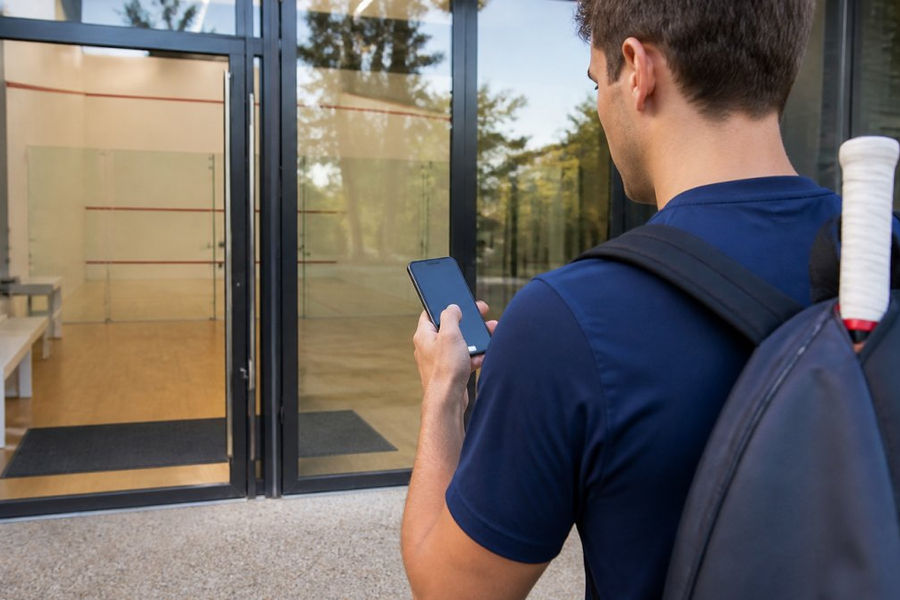
Online platforms show available courts and times. You select a slot, confirm, and receive immediate confirmation, no phone calls, and certainty your court is reserved.
At Launceston Squash Centre, we use the SALTO app for booking and entry.
Some facilities still take phone bookings or require in-person registration. Check your club's preferred method before your first visit; online booking usually offers more flexibility.
How far ahead to book
Lead times vary with demand:
Peak weekday evenings (5-9pm). Book 3-7 days ahead. These fill first, especially Monday to Thursday.
Weekend mornings. Book 2-4 days ahead. Popular with social groups and juniors.
Weekday midday and early afternoon. Often bookable same-day.
Early morning (6-7am). Usually available with 1-2 days' notice, though regulars often hold standing bookings.
If you're new to a club, book your first session off-peak, when courts are easier to secure and staff or members are more likely to show you around.
Step-by-step: booking and confirming a court
Check availability. Use the club's online booking system or call the front desk. Confirm the court, date, and start time.
Select your rate category. Choose casual, member, or guest pricing. If you're a member bringing a non-member, select the guest option so the correct rate applies.
Pay or hold. Some clubs take payment at booking; others hold the court and charge on arrival. Confirm which applies so your reservation isn't released.
Receive confirmation. You should get a confirmation by email, SMS, or in-app notification. If you don't, follow up before the day of play.
Note your access method. If the club uses smartphone key entry, make sure the app is installed and your booking is linked before you arrive. If it uses a physical key or fob, confirm collection arrangements.
Arrive 10-15 minutes early. This gives you time to change, warm up, and locate your court without eating into your slot.
Watch Out A booking is only confirmed when you have written or in-app confirmation. A verbal "we'll fit you in" is not a reservation, and the court may be given away if another player books it formally.
What to expect on your first visit
Your first session usually involves brief registration: contact details and confirmation of your membership or casual status.
Bring non-marking squash shoes, a racquet, and a water bottle. Most clubs have lockers, and many offer racquet hire, confirm availability and fees when you book.
Cancellation, refund, and no-show rules
These rules catch casual players out and are rarely listed alongside the headline rate. Ask before your first booking:
Notice period. Many clubs require 24 hours' notice to cancel without charge. Some accept same-day cancellation if the court is re-let.
No-show fees. If you don't cancel and don't turn up, clubs may charge the full court hire or a fixed no-show fee.
Refunds and credits. Policies vary. Some clubs refund to your account as a credit; others refund the card used at booking. Confirm which applies.
Guest and equipment charges. If you booked a guest rate or hired a racquet, check whether those charges are refundable on cancellation.
Weather or facility closures. If the club closes a court for maintenance, you should receive a reschedule or refund. Confirm the policy in advance.
Key Takeaway Before your first booking, get three things in writing: the total payable, the cancellation notice period, and the no-show charge. These three figures determine your real cost if plans change.
Booking checklist
Confirm the current rate for your specific time slot, including all fees.
Check how far ahead you need to book for that slot.
Obtain written or in-app confirmation.
Install and test any access app before the day.
Note the cancellation notice period and no-show charge.
Confirm racquet hire availability and cost if you need equipment.
Arrive 10-15 minutes early for your first session.
Comparing Squash Membership Fees Across Clubs
Membership models vary considerably between facilities. Understanding the differences helps you calculate whether membership pays for itself based on your playing frequency.
Annual versus casual membership options
Annual memberships commit you to a full year of access, typically at a fixed monthly or annual fee. Casual memberships, where offered, let you pay month-to-month without long-term commitment.
Many clubs offer tiered memberships: basic (court hire only), standard (includes facility amenities), and premium (adds coaching credits or priority booking). Evaluate which tier matches your actual needs rather than paying for features you won't use.
What's included in membership
Membership benefits typically include discounted court hire rates, priority booking during peak times, and access to social facilities like changing rooms and lounges. Some clubs include racquet storage lockers, coaching discounts, or social event invitations.
A few clubs bundle additional services: monthly coaching sessions, equipment maintenance, or tournament entry discounts. These add-ons can shift the membership value calculation if you're interested in improving your game or competing regularly.
Off-Peak Squash Court Rates and How to Save
If your schedule permits flexibility, off-peak booking delivers substantial savings without compromising court quality.
Weekday and early morning discounts
Midday slots on weekdays, roughly 10am to 4pm Monday through Friday, typically see the lowest demand and therefore the lowest rates.
Early morning slots (6-7am) sometimes offer discounted rates because fewer players book these times. Late evening slots (after 8pm) may also be discounted, though availability depends on operating hours.
Weekend mornings before 10am usually cost less than afternoon or evening weekend slots. Adjusting your routine to play earlier or on quieter weekdays cuts costs immediately.
How to calculate the full cost of a session
The court hire rate is only part of your session cost. Factor in equipment hire if you don't own a racquet, facility fees if charged separately, and parking if applicable.
Calculate your true cost per session by adding these components, then divide by the number of sessions you'll book annually. This reveals whether casual booking or membership offers better value.
Cancellation Policies and Hidden Fees to Check
Before committing to membership or booking regularly, clarify your club's cancellation policy and any fees beyond the quoted court hire rate.
Many clubs require 24-hour notice for cancellations to avoid charges. Some impose no-show fees if you don't cancel and don't use your court. A few charge facility, equipment storage, or membership processing fees not obvious in the quoted rates.
Ask specifically about:
Cancellation notice period and fees
No-show policies and charges
Facility or maintenance fees bundled into membership
Parking charges
Guest fees if bringing a non-member
Getting these details upfront prevents unexpected charges and helps you compare true total costs across clubs.
Choosing the Right Court Hire Option for Your Needs
Casual booking without membership suits occasional players, perhaps once or twice monthly.
Regular membership works best for players booking weekly or more.
Hybrid approaches exist at some clubs: casual members who pay a small monthly fee for discounted rates without committing to annual membership.
At Launceston Squash Centre, our flexible membership options let you choose the model that matches your playing style.
Frequently Asked Questions
How much does it cost to hire a squash court?
Squash court hire rates vary significantly depending on membership status, time of day, and facility. Members typically pay less per session than casual players. Peak-time bookings (evenings and weekends) cost more than off-peak slots. Contact your local club directly for current squash court hire prices, as rates change seasonally and by facility.
Can you hire a squash court without being a club member?
Yes, most clubs allow casual bookings for non-members, though rates are usually higher than member rates. Some facilities require casual players to book online or call ahead. Check your local club's policy on guest access.
Do squash clubs offer off-peak squash court rates?
Most clubs offer reduced off-peak squash court rates for weekday mornings, early afternoons, and sometimes late evenings. Off-peak pricing can be significantly cheaper than peak times. Compare rates across different time slots at your preferred club to find the best value for your schedule.
What should you check before paying for court hire?
Before booking, verify whether court lighting and changing facilities are included in the fee. Check cancellation policies and no-show charges. Confirm access hours, some clubs operate from early morning to late evening.
Book Online


Comments