
How to Join a Squash League in Launceston
Table of Contents
What You'll Need Before Joining
How to Find a Squash Club and League in Your Area
Understanding Club Membership and Registration
How Squash Box Leagues Work
Squash League Rules and Match Format
Understanding Squash League Match Format
Beginner Squash Equipment You'll Need
Common Mistakes to Avoid When Joining
Frequently Asked Questions
Last Updated: October 15, 2026
What You'll Need Before Joining
Before you sign up for a squash league in Launceston, gather a few essentials. You'll need a racquet, proper court shoes, eye protection, and a willingness to learn the game's rules. Most clubs have equipment standards, so check what's required before your first match.
You should also have a smartphone for booking courts and accessing the facility. Many modern squash venues now use apps for entry and reservations. It makes the whole process faster and more flexible.
Finally, decide how often you want to play. Are you a casual player joining once a month? Or someone committed to weekly matches? Your answer shapes which membership option works best for you.
How to Find a Squash Club and League in Your Area
Learning how to join a squash league in Launceston starts with identifying who actually runs organised play in your area. In Launceston, that means looking beyond a generic venue search and checking three specific channels: the local squash centre, the state sporting body, and community noticeboards.
1. Start with the local squash centre. The Launceston Squash Centre is the primary dedicated facility in the region and the most likely host of box leagues and pennant competitions.
2. Check the state body. Squash in Tasmania is administered through the state association affiliated with Squash Australia, the national governing body. The state body's website typically lists affiliated clubs, junior programs, and interclub competitions. If the Launceston centre is between league rounds, the state body is where you will find the next season's dates and the contact for the local competition coordinator.
3. Use community channels. Local Facebook groups, community sports noticeboards, and university clubs often post when a league needs players or when a team is short a member. These are also where you will hear about social squash nights that act as a feeder into league play.
When you make contact, ask these questions so you can compare options:
Which league formats run here, box league, pennant, team-based, or individual?
When does the next season or round begin, and can I join mid-season?
How are players graded into divisions?
What nights are league matches played, and how often?
Is there a social or beginner session I can try before committing?
Pro Tip If the first club you contact is not recruiting, ask to be added to a waitlist and ask for the name of the competition coordinator. A single warm contact often unlocks a spot faster than a fresh enquiry weeks later.
If no league is currently running, fallback options keep you playing: social squash nights, casual court hire with a regular partner, or a nearby club within a reasonable drive. Ask each venue whether they maintain a list of players looking for matches, many do, and that list is often the fastest route into a league when one opens.
Understanding Club Membership and Registration
Most squash clubs require some form of membership or registration before you can enter a league, but the exact structure varies. Here is what to expect and how to confirm the specifics before you pay anything.
Typical membership structures
Casual court hire, pay per session, no league eligibility. Good for trying the sport.
Social membership, access to social play and casual bookings, sometimes with a discount on court fees.
Full or league membership, includes league entry, priority booking, and sometimes coaching or social events.
League-only registration, some clubs let you pay a league fee on top of a basic membership rather than a full annual fee.
What membership usually includes
Access to courts during member hours
Eligibility for league and club competitions
Insurance coverage through the club's affiliation with the state and national body
Access to club social events and, at some venues, coaching sessions
The registration sequence
Contact the club and confirm which membership tier gives you league eligibility.
Complete the registration form, usually online, sometimes in person. You will provide your name, contact details, and a rough indication of your playing level.
Pay the membership fee and any league entry fee. These are separate at most clubs. Ask for both figures in writing before you commit.
Complete any affiliation requirement. Clubs affiliated with Squash Australia typically register members through the national body, which provides insurance and a player profile. Ask whether this is included in your fee or charged separately.
Set up court access. Many modern venues use a smartphone app or keypad code for entry. Confirm how you book courts and how far in advance.
Get graded. Before your first league match, the club will place you in a division or box based on your experience. Be honest about your level, understating it is better than overstating it.
Costs to confirm before joining
Fees vary by club, membership tier, and season, so treat any figure you see online as indicative only. Ask the club directly for:
Annual or seasonal membership fee
League entry fee per season
Court hire rate for members and non-members
Affiliation or insurance fee, if charged separately
Any joining or administration fee
Watch Out Do not assume a quoted membership fee includes league entry. At many clubs these are separate charges, and the league fee is often payable per season rather than annually. Get both numbers before you decide.
Beginner access and equipment
Beginners are generally welcome in club leagues, but the entry point matters. Ask whether the club runs a beginner division, a graded box for new players, or a social session that feeds into league play. If you have never played, a social or coaching session first will make your league debut far more enjoyable.
On equipment: most clubs can lend a racquet and a ball for your first session, and some sell beginner racquets on site. Court shoes with non-marking soles and eye protection are usually required and are rarely available to borrow, so plan to bring your own. Call ahead and ask exactly what the club provides so you do not arrive unprepared.
If the club is not recruiting
Leagues run in seasons, so there will be periods when entry is closed. In that case, ask to be added to a waitlist, ask when the next season opens, and ask whether you can play socially in the meantime. A club that knows your name is far more likely to slot you into a team when a vacancy appears.
How Squash Box Leagues Work
Squash box leagues are a popular format that keeps competition fair and engaging. In a box league, players are grouped by skill level, usually in groups of four to eight. Each player plays every other player in their box once, and results are tracked on a leaderboard.
The beauty of box leagues is their flexibility. You don't need to commit to a fixed schedule. Instead, you arrange matches with other players in your box within a set timeframe, usually a month. This suits people with irregular schedules.
Here's how it works in practice:
You're placed in a box with similar-level players. The club assesses your ability and assigns you accordingly.
You contact other players to arrange matches. Most clubs have online messaging systems to coordinate.
Play your matches within the month. You have flexibility in timing.
Results are recorded on the leaderboard. Your position updates as you win or lose.
At month's end, the top players may move up a box. The bottom players move down.
This format removes pressure. You're not locked into a specific night or opponent. You simply play when you can, and the leaderboard keeps things competitive.
Watch Out Don't ignore your box matches. If you don't play within the timeframe, you'll be marked as inactive and may be removed from the league. Check the club's rules on how many matches you need to complete each month.
Squash League Rules and Match Format
Understanding Squash League Match Format
A typical squash league match is a best-of-three games format. Each game is played to 11 points, and the first player to 11 points wins that game. You need to win two games to win the match.
The rules are straightforward. Players take turns serving, alternating serves every two points. If the score reaches 10-10, it's called "deuce," and the first player to pull ahead by two points wins.
League matches follow official squash rules set by governing bodies. These include:
Serve rules. The server must stand in the service box and hit the ball above the service line.
Rally rules. The ball must hit the front wall and bounce in the court. Players alternate hitting it.
Let and stroke calls. If a player blocks your shot unfairly, you can claim a let (replay) or stroke (point).
Court conduct. Players must show respect, avoid excessive celebration, and keep noise down.
Most clubs provide a quick briefing on local rules when you join. If you're new to squash, don't hesitate to ask the club staff or your opponent for clarification during your first few matches.
Beginner Squash Equipment You'll Need
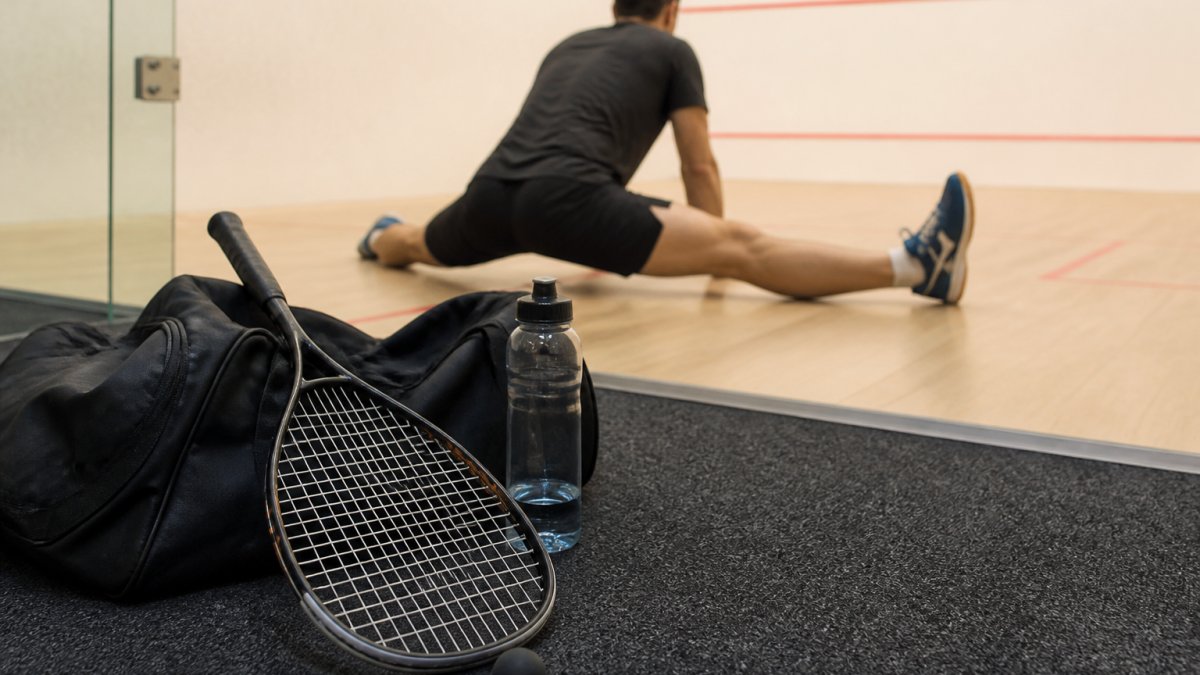
Starting squash requires minimal gear, which makes it an accessible sport. Here's what you actually need:
Essential equipment:
A squash racquet
Squash shoes with non-marking soles (required by most courts)
Eye protection (goggles or protective glasses)
A squash ball (the club usually provides these)
A water bottle and towel
Optional but helpful:
A squash bag to carry your gear
Wristbands to manage sweat
A grip enhancer for your racquet handle

Don't spend a fortune on your first racquet. A mid-range option lets you learn the game before investing in premium equipment. Many clubs sell or recommend beginner-friendly racquets.
Eye protection is non-negotiable. Squash balls travel fast, and eye injuries are serious (pubmed.ncbi.nlm.nih.gov). Most clubs require you to wear protective eyewear, and it's a rule worth respecting.
Common Mistakes to Avoid When Joining
New league players often make the same mistakes. Knowing them helps you avoid frustration.
Joining a league above your level. It's tempting to jump into intermediate or advanced leagues, but you'll lose most matches and enjoy the experience less. Start in a beginner league.
Skipping the club induction. Many clubs offer a brief introduction to their courts, rules, and systems. Attend it. You'll learn valuable shortcuts and meet other players.
Not checking court etiquette rules. Every club has expectations about noise, court cleaning, and conduct. Read them before your first match. Breaking unwritten rules can make you unpopular quickly.
Overcommitting to matches. Box leagues are flexible, but don't sign up for more matches than you can realistically play. Missing matches damages your reputation and frustrates opponents.
Ignoring the booking system. If your club uses an online system like SALTO, learn it properly. Arriving to find someone else has booked your court wastes everyone's time.
Playing without proper footwear. Court shoes aren't just comfort, they protect the court surface and prevent injuries. Wearing regular trainers is often against club rules and shows disrespect to the facility.
Joining a squash league transforms casual play into structured competition. The first step is finding a club that matches your schedule and skill level.
Frequently Asked Questions
Can beginners join a squash league?
Yes. Most squash leagues welcome all ability levels, including complete beginners. Many clubs offer coaching or beginner-friendly boxes where you play against others at similar skill levels. Starting in a social or beginner division lets you build confidence without pressure. Check with your local club about their beginner pathways, many have structured programs to help new players settle in.
What equipment do I need to start playing squash?
You'll need a squash racquet, squash shoes (with non-marking soles), a squash ball, and eye protection. Most clubs require eye protection for safety. Beginners don't need expensive gear, budget-friendly racquets and shoes work fine while you're learning. Many clubs sell or loan basic equipment, so ask when you join. Proper court shoes prevent injury and improve your movement on court.
How often do squash league players compete?
League frequency varies by format. Box leagues typically run weekly or fortnightly matches over 10-12 weeks per season. Social leagues may play less frequently. Ask your club about their current schedule, most post match dates and times on their website or app. Some players also compete in tournaments or friendly matches outside the league structure.
Do I need a squash rating to join a league?
No formal rating is required to join most beginner or social leagues. Clubs use self-assessed ability or past playing experience to place you in the right division. If you've played before, mention it when you register so the club can match you fairly. Some higher-level leagues may ask for a squash rating, but entry-level boxes accept all skill levels.
Book Online


Comments