
Is Squash Good Exercise for Beginners? A 2026 Guide
Table of Contents
Why Squash Works as Beginner Exercise
Cardiovascular and Musculoskeletal Benefits
How Squash Compares to Other Racket Sports
Calories Burned Playing Squash: What to Expect
Squash for Beginners Tips: Drills, Warm-Ups, and Pacing
Beginner Drills and Warm-Up Routine
Equipment, Costs, and Recovery for New Players
Cost-Benefit Analysis of Beginner Gear
Recovery Protocols for Non-Athletes
How to Book a Squash Court and Find a Partner
Booking a Court
Finding a Partner as a Beginner
Common Beginner Mistakes and How to Avoid Them
Conclusion: Your First Step onto the Court
Frequently Asked Questions
Last Updated: September 19, 2026
Why Squash Works as Beginner Exercise
The question "is squash good exercise for beginners" has a simple answer: yes, and it may be one of the most efficient workouts you can pick up as an adult. The reason is simple: squash is a full-body workout disguised as a game. You sprint, lunge, twist, and swing, often within seconds of each other, and the court's enclosed walls keep the ball in play so you rarely stand still.
Cardiovascular and Musculoskeletal Benefits
Squash builds cardiovascular endurance fast because the rallies are short and intense, closer to high-intensity interval training than a steady jog. Your heart rate climbs quickly, drops during brief pauses, then climbs again. That stop-start pattern is exactly what improves aerobic capacity and anaerobic threshold over time.
How Squash Compares to Other Racket Sports
Squash demands more lateral movement and court positioning than most racket sports, simply because the ball can rebound off four walls. That means more changes of direction, more explosive power, and more work for your agility and hand-eye coordination.
Calories Burned Playing Squash: What to Expect
Calories burned playing squash depends on your body weight, rally length, and how hard you push, but the sport ranks among the highest-burn recreational activities. A vigorous session can burn more energy per minute than jogging, because the intervals keep your metabolic rate elevated well after you leave the court.
Session Type | Typical Duration | Intensity | Main Benefit |
Casual hit with a friend | 30-40 min | Low to moderate | Movement, coordination |
Structured solo drills | 20-30 min | Moderate | Swing mechanics, footwork |
Full games, best of five | 45-60 min | High | Cardiovascular endurance |
Coaching session | 45-60 min | Varied | Technique, injury prevention |
Squash for Beginners Tips: Drills, Warm-Ups, and Pacing
The biggest mistake new players make is treating their first session like a match. Squash for beginners tips start with pacing: play shorter games, take the full break between points, and stop while you still feel good. You'll recover faster and come back sooner.

Beginner Drills and Warm-Up Routine
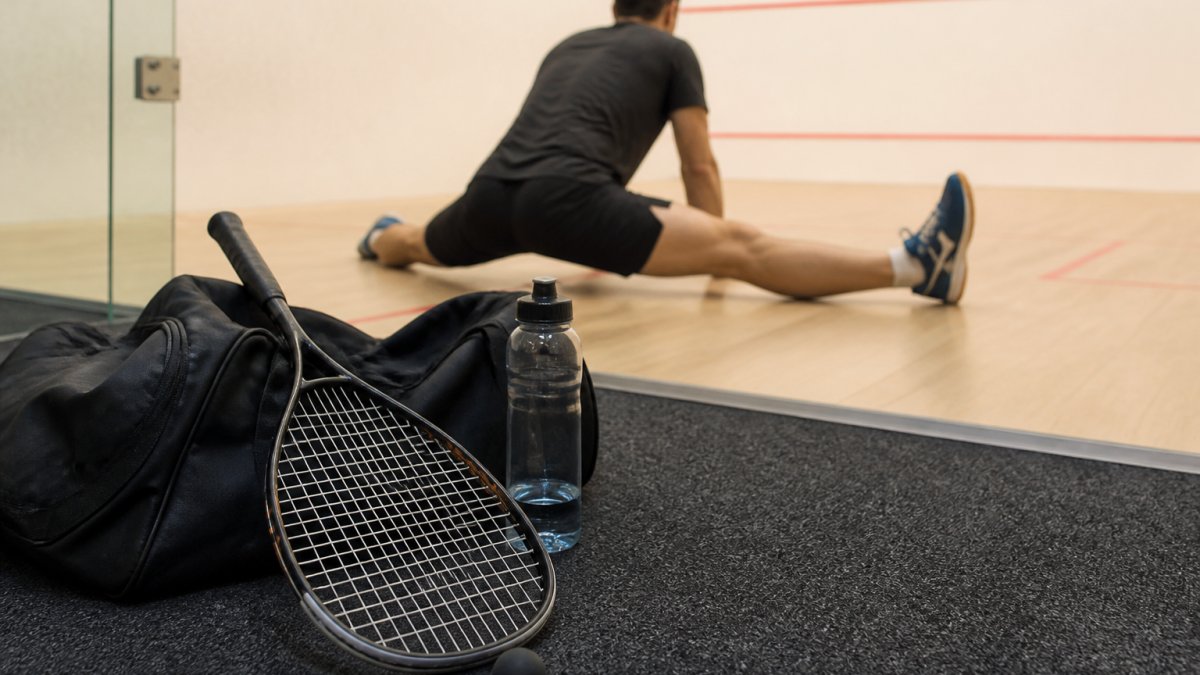
A proper warm-up routine takes five minutes and protects your ankles, knees, and shoulders. Try this sequence before every session:
Jog two lengths of the court, then two lengths of side-stepping
Ten walking lunges per leg, holding the wall for balance
Arm circles, 15 forward and 15 back
Ten practice swings on each side, no ball
Two minutes of straight drives, hitting gently against the front wall
Equipment, Costs, and Recovery for New Players
You need very little to start, but the cost question is where most beginner guides go vague. Here is a realistic picture of what you will actually spend in your first few months, and what you can safely borrow or hire instead of buying.
Cost-Benefit Analysis of Beginner Gear
The honest rule for beginners: hire or borrow until you have played at least six to eight sessions, because your preferences will change once you have actually hit a ball. A racket that feels fine in the shop can feel heavy or head-light after an hour of rallies.
Item | Typical Price Range | Rent or Buy First? | Why It Matters |
Non-marking court shoes | $80-$160 | Buy | Grip, ankle support, and most courts require non-marking soles |
Entry-level racket | $60-$150 | Hire first, then buy | Light and forgiving; hire from the centre for a few dollars per session |
Eye protection | $20-$50 | Buy | Safety during close rallies; many centres require it |
Squash ball (beginner, blue or red dot) | $5-$12 | Buy | Slower balls bounce more and are far easier to rally with |
Gloves or grip tape | $10-$25 | Optional | Comfort once you play regularly |
Coaching session | $60-$120 per hour | Optional | Fastest fix for swing mechanics |
Recovery Protocols for Non-Athletes
Recovery is where non-athletes get caught out. Squash is stop-start, so your muscles work hard in short bursts and then cool down between rallies. That pattern can leave you stiff the next day if you skip the cool-down, and the eccentric loading from lunging is what causes most of the next-day soreness.
A simple post-session routine:
Walk a lap of the court for two to three minutes to bring your heart rate down gradually
Stretch calves, quads, hamstrings, and shoulders, holding each for around 20-30 seconds
Drink water before you leave the court, not just when you get home
Eat something with protein and carbohydrate within an hour or two if you played hard
Pro Tip Book your next session before you leave the court. Beginners who schedule the follow-up on the day are far more likely to still be playing a month later than those who say they will sort it out later.
How to Book a Squash Court and Find a Partner
Booking a court is the easy part. Finding someone to play is the barrier that stops most beginners, and it is the one most guides skip. Here is how to solve both.
Booking a Court
Most centres now let you reserve online and pay per session, so you do not need a membership to play casually. The typical process takes about two minutes: pick a time, choose your court, and confirm. Expect to pay per court per hour, with off-peak times often cheaper. Some centres also offer a casual social session where you pay per person and get matched with others, which is the cheapest way to try the sport.
A few practical notes:
Peak times (early morning and after 5pm on weekdays) book out fastest, so reserve a day or two ahead
Most centres hire rackets and sell beginner balls at the front desk
Check whether the centre requires non-marking shoes and eye protection before you arrive
Finding a Partner as a Beginner
The 'I don't have a partner' problem has more solutions than most people realise:
Ask at the front desk. Most centres keep an informal list of players looking for games, or know which social nights suit beginners.
Join a club social night or ladder. These are usually graded by standard, so you are matched with people at a similar level rather than thrown in against experienced players.
Try a beginner coaching group. Group sessions are cheaper than one-on-one coaching and connect you with people at exactly your stage.
Post in local community groups and workplace noticeboards. A simple 'beginner looking for a hit, happy to play casually' post often gets replies.
Use a partner-finding app or forum. Several racket-sport apps and local Facebook groups let you post your level and availability.
Book a solo court and drill. You do not need a partner to improve. Solo drills build swing mechanics and footwork, and many beginners find them more productive than a scrappy first game.
Key Takeaway You do not need a regular partner to start. A social night, a beginner group session, or even a solo drill session will get you on court this week. The partner often turns up once you are already playing.
Common Beginner Mistakes and How to Avoid Them
The most common mistake is going too hard in the first session. Beginners who sprint every rally burn out in 20 minutes and wake up sore for days. Pace yourself, take the breaks, and build up over several weeks.
Other traps worth avoiding:
Skipping the warm-up, which is the fastest route to a rolled ankle
Wearing running shoes on court, which lack the grip and support squash demands
Gripping the racket too tightly, which tires your forearm and ruins control
Standing still after your shot instead of returning to the T, the centre of the court
Playing through joint pain because you don't want to seem soft
Pro Tip Return to the T after every shot, even when you're tired. Beginners who recover to the centre of the court win more rallies than those with prettier swings, because they're already in position for the next one.
Conclusion: Your First Step onto the Court
Squash rewards effort quickly, which is why it suits beginners so well. You don't need to be fit to start; you get fit by starting. Book a court, borrow a racket, warm up properly, and play a short first session. Then do it again next week.
Frequently Asked Questions
Do I need to be fit before I start playing squash?
No. Squash for beginners is scalable. Start with short rallies, focus on court positioning and swing mechanics, and build stamina gradually. A proper warm-up routine and cool-down reduce injury risk. Most new players find their aerobic capacity improves within a few weeks of recreational play, even if they start with low fitness levels.
How many calories can a beginner expect to burn playing squash?
Caloric expenditure varies with intensity, body weight, and session length. A 30-minute recreational session can burn a significant number of calories because squash involves high-intensity interval training patterns, lateral movement, and full-body workout demands. Tracking heart rate during play gives a more accurate personal estimate than generic tables.
What equipment do I need for my first squash session?
You need non-marking court shoes, comfortable sportswear, a squash racket, and protective eyewear. Many facilities offer racket hire for beginners. A cost-benefit analysis of beginner gear shows that entry-level rackets and basic eye protection are sufficient while you learn swing mechanics and court movement. Check with the venue about hire options before buying.
How do I book a squash court and find a partner as a beginner?
Most centres now let you book a squash court online, often through a self-service app that provides entry via a smartphone key. For finding a partner, try club noticeboards, social media groups, or beginner-friendly sessions. Playing with someone at a similar level helps you focus on squash for beginners tips like court positioning and consistency rather than trying to keep up with advanced players.
The hardest part of picking up squash isn't the fitness, the gear, or the rules. It's booking that first court and finding someone to hit with. Launceston Squash Centre makes both simple, with online booking, self-service entry through the SALTO app, extended hours from 6am to 11pm daily, and flexible membership options for casual and regular players alike. Get started with Launceston Squash Centre and book your first court online.
Book Online

Comments