
How to Play Squash for Absolute Beginners
Table of Contents
What You'll Need to Play Squash
Understanding the Squash Court and Basic Rules for Beginners
Court Layout and Lines
Legal Shots and the Tin
How to Serve in Squash
Squash Scoring System Explained
Your First Rally: Basic Strokes and Court Positioning
Forehand and Backhand
Moving and Footwork
Squash Drills for Beginners to Build Confidence
Common Beginner Mistakes and How to Avoid Them
Safety, Etiquette, and Your First Session
Frequently Asked Questions
Last Updated: October 19, 2026
What You'll Need to Play Squash
Before you step onto a squash court, you need just three things: a racquet, a ball, and court access. No expensive gear or years of experience required.
A squash racquet is smaller and lighter than a tennis racquet, weighing around 140-170 grams with a narrow head. Most beginners use a reasonably priced mid-range racquet.
The squash ball matters more than most beginners realise. Balls come in different speeds marked by coloured dots. A single yellow dot ball is the competitive standard and bounces higher when warm. Beginners should start with a blue dot or red dot ball, which bounce lower and slower, making the game easier to learn and letting you focus on technique.
Court access is straightforward. At Launceston Squash Centre, you can book courts online and access them via the SALTO app on your smartphone, no complicated check-in process. The centre operates from 6am to 11pm daily, so you can play when it suits your schedule.
You don't need special shoes, though court shoes with good lateral support help. Wear comfortable clothes, bring a water bottle, and you're ready to start.
Understanding the Squash Court and Basic Rules for Beginners
A squash court is a rectangular box with four walls: front, back, and two sides. Understanding the layout is the foundation of learning how to play squash for absolute beginners.
Court Layout and Lines
The front wall has several key markings. A horizontal line about 1.8 metres high is the service line, with the service box below it. The tin is a metal strip at the base of the front wall; any ball that hits it is out.
The floor has a service line across the middle dividing it into two halves, with two service boxes on either side. The out line runs around the court at about 4.5 metres high; any ball above it is out of bounds.
When learning how to play squash for absolute beginners, focus on three zones: the front wall (where you aim), the tin (the danger zone below), and the out line (the ceiling boundary). Most beginners hit the tin or clear the out line at first, which is normal.
Legal Shots and the Tin
A legal shot hits the front wall above the tin and below the out line without bouncing on the floor first. Bouncing off the side or back walls before the front wall is fine and often part of the rally.
The tin is your biggest enemy early on: a metal strip about 48 centimetres high at the base of the front wall. Hit it and you lose the point immediately. Beginners hit it constantly because they aim low. The fix: aim for the middle or upper half of the front wall and let the ball bounce back naturally.
A let is a replayed rally, called when your opponent unintentionally blocks your shot or interferes. As a beginner, just know they exist and the point restarts.
How to Serve in Squash
Every rally starts with a serve. The server stands in the service box and hits the ball so it hits the front wall above the service line. The ball must land in the opposite service box on the floor before the opponent returns it.
Your serve doesn't need to be aggressive; a simple, consistent serve beats a powerful one you can't control. Stand in the service box with feet shoulder-width apart, hold the racquet with a relaxed grip, bounce the ball once to judge height, then hit it gently upward toward the front wall.
Aim for a spot on the front wall between the service line and about 30 centimetres above it. The ball will travel up, hit the front wall, bounce back across the court, and land in the opposite service box. That's a good serve.
If your serve hits the tin, goes above the out line, or lands outside the service box, it's a fault; two faults and you lose the point. Faulting a few times while learning is normal. Focus on consistency over power: a weak serve that lands in the box beats a powerful one that misses.
Squash Scoring System Explained
Squash uses rally scoring: every rally gives a point to someone, regardless of who served. The first player to 11 wins the game, but must win by at least 2 points.
At 10-10, called deuce, play continues until one player leads by 2 points, so a game might end 11-9, 12-10 or 13-11.
Most matches consist of three games. Win two games and you've won the match. Some competitive matches are best-of-five games, but beginners usually play best-of-three.
The server announces the score before each serve, their score first. If you're serving and leading 7-4, you'd say "seven, four" before serving.
Rally scoring is simple: hit the ball legally and win the point; miss or hit it illegally and your opponent wins it. Play to 11, win by 2, and you've won the game.
Your First Rally: Basic Strokes and Court Positioning
Once the serve is in play and the rally starts, basic strokes and court positioning are essential for learning how to play squash for absolute beginners.

Forehand and Backhand
The forehand is your dominant side: right for right-handers, left for left-handers. The racquet swings across your body, and you hit the ball as it bounces off the floor or walls.
The backhand is your non-dominant side. It feels awkward at first. Most beginners avoid their backhand, but you can't avoid it in squash, the court is small and balls come at you from everywhere.
For a forehand, stand with feet shoulder-width apart. As the ball approaches, rotate your shoulders, bring the racquet back, swing forward smoothly and make contact at about knee height, following through toward your target on the front wall. The motion is simple: back, swing, follow through.
The backhand uses the same principle on the opposite side. It feels unnatural at first, so practise it deliberately, even when you don't have to. After a few sessions, it becomes automatic.
Moving and Footwork
Squash requires constant movement. The court is small, about 6 metres by 9.75 metres, but you're always repositioning for the next shot.
After you hit a shot, move back toward the centre court position, roughly the middle of the court a few metres back from the front wall. From here you can reach most shots. Move to the ball, hit it, return to centre, repeat.
Most beginners stay where they hit the ball. After you strike a shot, move back to centre court and wait. This simple habit, hit then move back to centre, will improve your game more than anything else.
Use small, quick steps. Don't lunge or overcommit. The court is small enough that a few quick steps get you anywhere you need to be. Keep your knees slightly bent and your weight on the balls of your feet. This ready position lets you react quickly to whatever your opponent hits.
Squash Drills for Beginners to Build Confidence
Practice drills build skills faster than just playing rallies. Here are beginner-friendly drills to work on between matches.
The wall drill is the simplest. Stand in the court and hit the ball against the front wall repeatedly. Don't worry about the service box or any specific target. Just keep the ball in play. Hit forehand, backhand, forehand, backhand.
The service box drill focuses on accuracy. Stand in the service box and hit balls to land in the opposite service box. You're practising the serve without the pressure of a real match.
The length drill teaches you to hit balls deep into the court. Your opponent stands at the back wall. You hit balls from the front, aiming for them to bounce near the back wall. They return the ball. You hit it back.
The corner drill has you moving between corners. Your opponent hits a ball to your right corner. You move there, hit it back. They hit it to your left corner. You move left, hit it. Back and forth.
Do these drills for 10-15 minutes before each session. They're not as fun as playing, but they accelerate your learning dramatically.
Common Beginner Mistakes and How to Avoid Them
Every beginner makes the same mistakes. Knowing them in advance saves you frustration.
Hitting the tin is the number one mistake. You aim too low because you think the ball needs to stay down. In reality, aim for the middle or upper half of the front wall.
Standing still after hitting is the second mistake. Beginners hit a shot and watch where it goes. Meanwhile, their opponent is already hitting it back. Move back to centre court immediately after every shot.
Swinging too hard is common. Beginners think power wins rallies. It doesn't. Control wins. A gentle, accurate shot beats a wild, powerful one every time.
Ignoring the backhand keeps beginners stuck. You can't play squash using only your forehand. The court forces you to use both sides. Practise your backhand deliberately. Hit backhand shots even when a forehand is available.
Poor court positioning costs beginners points. Stay near the centre of the court between shots. Move to the ball, hit it, move back to centre.
Rushing the serve leads to faults. Take your time. Bounce the ball. Focus on your target. Hit smoothly.
Safety, Etiquette, and Your First Session
Squash is a safe sport if you follow basic rules. The main hazard is the ball. It's small and travels fast. Wear protective eyewear. Your eyes are irreplaceable. Protect them.
Court etiquette matters. Let your opponent know when you're ready to play. Call the score clearly before each serve. If you accidentally hit your opponent with the ball or racquet, apologize.
Interference rules exist to keep play fair. If your opponent blocks your shot unintentionally, the referee calls a let and you replay the point.
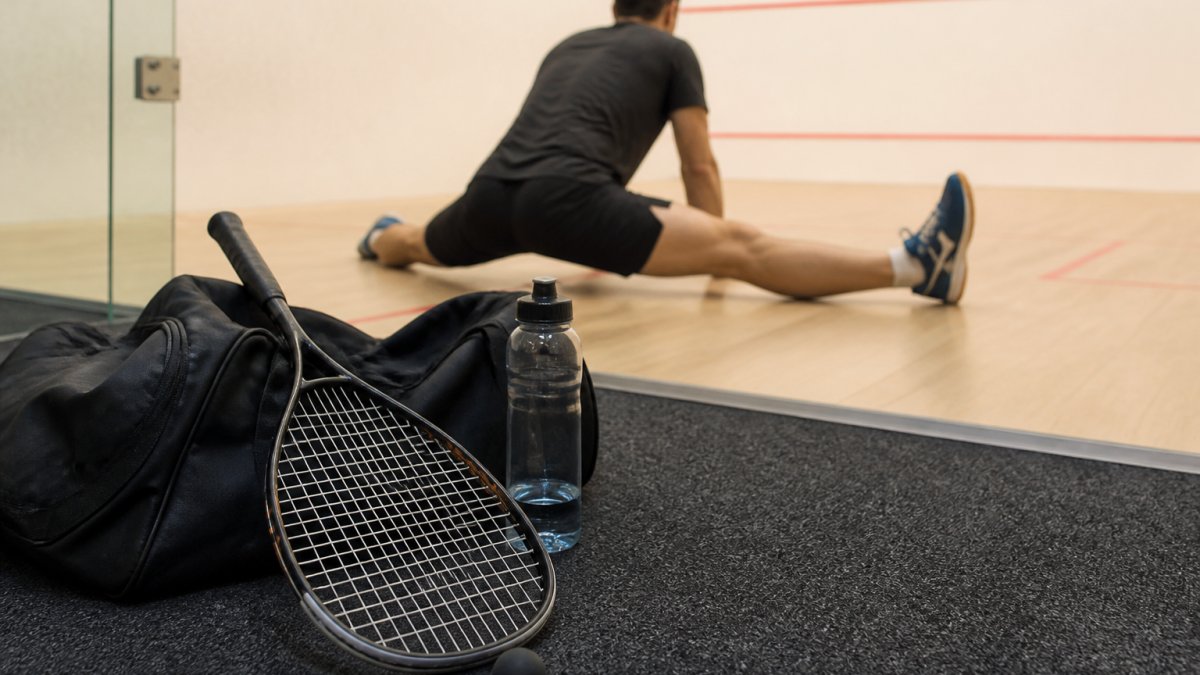
Warming up prevents injury. Spend 5 minutes moving around the court before you play. Do some light stretching. Get your muscles warm and your heart rate up.
Your first session should be relaxed. Book a court at Launceston Squash Centre, bring your gear, and arrive 10 minutes early.
Don't expect to be good immediately. Squash has a learning curve. Your first few sessions will feel awkward. That's normal. Every player starts exactly where you are.
The game rewards practice and consistency. Show up regularly, focus on the fundamentals, and you'll improve steadily. Most importantly, enjoy the process.
Learning how to play squash for absolute beginners opens the door to a sport that's challenging, social, and genuinely fun. Our flexible membership options mean you can play as often or as casually as suits your schedule.
Frequently Asked Questions
How do you play squash for the first time?
Start by booking a court and arriving 15 minutes early to warm up. Begin with an experienced player who can show you the basic grip, stance, and how to hit the ball against the front wall. Play a few practice rallies focusing on keeping the ball in play rather than winning points.
What are the basic rules of squash?
In squash, players take turns hitting the ball against the front wall. The ball must bounce between the service box lines on the serve and can bounce once on the floor before you hit it. You lose a rally if the ball bounces twice, hits below the tin (metal strip at the base of the front wall), or goes out of bounds. The ball can hit side and back walls before bouncing on the floor. Safety comes first: if your opponent is in your way, call a let and replay the point.
What equipment do beginners need to play squash?
You need a squash racquet, a squash ball, and appropriate footwear (trainers with good lateral support). Most beginners start with a blue dot or red dot ball, which bounce lower and slower, making the game easier to learn and letting you focus on technique. Wear comfortable, breathable clothing. Bring a water bottle and a towel for your first session.
How does scoring work in squash?
Modern squash uses point-a-rally scoring: whoever wins the rally scores a point, regardless of who served. Games are typically played to 11 points, and you must win by at least 2 points. If the score reaches 10-10, play continues until one player leads by 2 points. A match is usually best-of-three or best-of-five games. This system makes every rally count and keeps beginners engaged from the start.
Book Online


Comments