
Glass Back Wall Squash Courts: Benefits for Players and Clubs
Updated: 3 days ago
Last Updated: November 5, 2026
Quick Summary
A glass back wall opens up the court, letting spectators watch rallies from behind and giving cameras a clear angle for streaming or recording. It can feel slower to some players, and it needs regular cleaning and seal and hardware checks.
Spectators can follow the rally from start to finish without losing the ball.
A clear back wall gives cameras an unobstructed angle for streaming or recording.
Some players find a glass court slower, so try one before deciding.
Ask suppliers for glass type, thickness, interlayer and test references in writing.
Request quotes split into supply, installation, door, commissioning and maintenance lines.
Table of Contents
What a Glass Back Wall Changes on a Squash Court
Launceston Squash Centre has been looking at how a glass back wall changes the experience of playing and watching squash, and the honest answer is that it changes less than the marketing suggests and more than the purists expect. Glass swaps a solid wall for a transparent one, and that single change ripples through sightlines, the feel of the ball and the look of the room.
The most visible change is that the court opens up. Players and spectators can see through the back wall, so the room reads as larger and more connected. Some players find this appealing, while others say the transparent back wall is distracting when they are trying to focus on a shot. Both reactions are worth knowing before you commit to a court design.
Glass also changes what happens around the court. Doors, fittings and frame details become part of the design rather than an afterthought, which means the installation decisions matter as much as the glass itself.
Spectator Visibility and Court Presentation
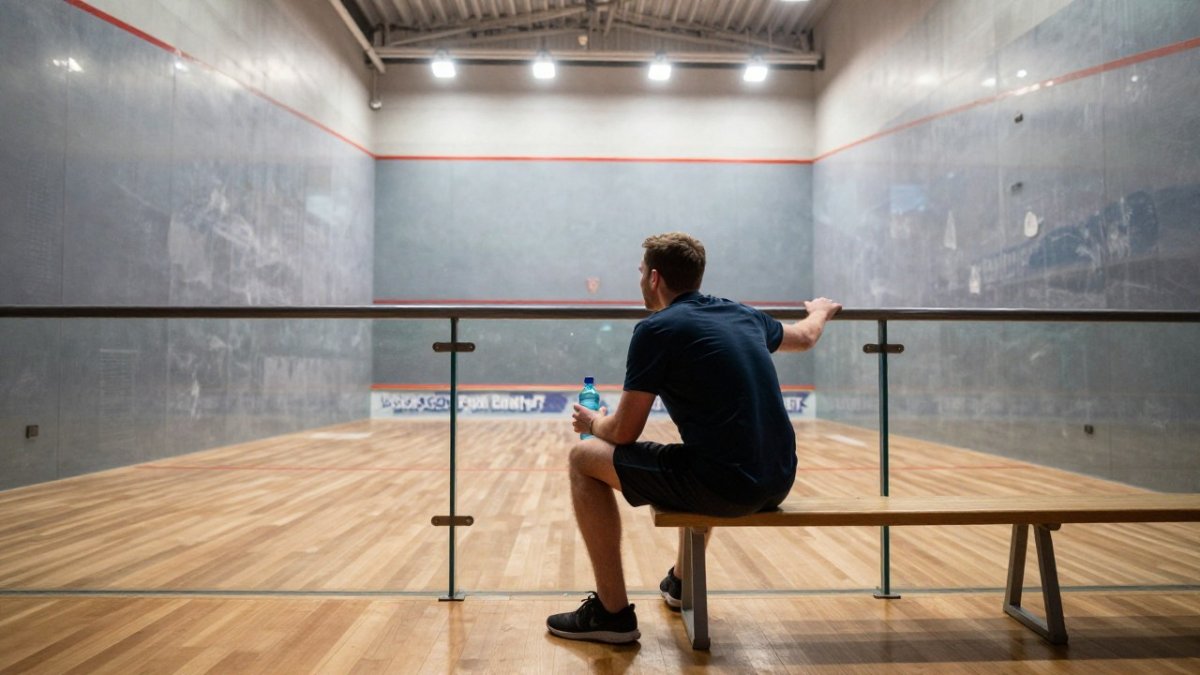
A glass back wall lets spectators watch a match from behind the court rather than peering through a door or standing in a narrow gallery. That is the main reason clubs and venues choose glass, and it is why glass courts are often used for showcase events. Seated spectators can follow the rally from start to finish without losing the ball.

Presentation also matters for the people filming the match. A clear back wall gives a camera an unobstructed angle, and that helps when a club wants to stream or record play.
We would suggest checking sightlines from the seats you plan to use, not just from the centre of the court. A court that looks impressive from the middle can still hide the back corners from the upper rows.
How Glass Back Walls Affect Ball Rebound and Playing Feel
Players often ask whether a glass wall plays differently from a solid one, and the answer is that it can. A glass court may feel slower, and some players report that the ball is harder to warm up on a glass back wall.
The honest picture is that the feel depends on the specific construction and on how the court is set up. Whether that consistency outweighs any change in pace will depend on the player.
Playing on a Glass Squash Court at Different Skill Levels
Players at different levels will notice different things. Beginners may benefit from the open, bright room, which can make a court feel less enclosed. Stronger players may care more about pace and ball behaviour, and they may find a glass court slower than they are used to.
Our advice is to try a glass court before you decide. Book a session, play a few games and notice how the ball comes off the back wall compared with your home court.
Safety, Glass Specification and Impact Resistance
Safety is the first question for any glass wall, and it is one where the specification matters more than the appearance. The useful conversation starts with the glass type, the interlayer and the fixings.
Toughened glass is heat-treated so that it breaks into small, blunt fragments rather than sharp shards, which reduces laceration risk if it fails. Laminated glass bonds two or more panes around a plastic interlayer, so a cracked pane stays in place rather than falling out. Many court systems use laminated toughened glass to get both properties: the strength of toughening and the retention of lamination. Ask the supplier which of these applies to the panes they propose, and ask for the thickness and the interlayer type in writing. For a wider look at what drives the total investment, see what automated court access really costs.
Impact resistance is usually demonstrated through testing rather than claimed. A common pattern is for manufacturers to reference ball-impact or body-impact testing against a recognised standard, and for the glass to be marked accordingly. Ask the supplier which Australian standards their glass and installation are designed to meet, and whether the glass carries the relevant marking. If the court is in a school or public facility, check with the local building authority about the approval process that applies.
Watch out: a supplier who cannot produce a glass type, a thickness, an interlayer specification and a test reference in writing is asking you to accept safety on trust. Get those details before signing.
Fixings and hardware deserve as much attention as the glass. Failures are more likely to originate at edges, clamps and door hardware than in the middle of a pane, because edges are where stress concentrates and where water can sit. Ask how the glass is retained (clamped, bolted or set in a frame), whether edge protection is specified, and what the inspection interval is for connectors and door hinges. A simple periodic check of fixings, seals and door alignment can catch many problems early.
Door hardware is a separate safety consideration. The door needs to open smoothly, close securely and not trap fingers, and it should be obvious to a player running backwards whether the door is open or closed. Ask for the door's swing direction, its handle type and whether it has a viewing panel, because a solid door in a glass wall creates a blind spot exactly where players move fastest.
Installing a Glass Back Wall: Design and Access Considerations
Installation is where many glass court projects succeed or stall. Some systems use a freestanding wall, which can suit an existing court, while others are built into the room from the start. Ask whether the glass door is part of the system and how it opens, because access and layout affect everyday use.
Think about access for players and staff as well. Door placement, handle height and the route in from the changing area all shape how the court works day to day.
Glass Squash Court Maintenance and Long-Term Cost
Maintenance is one area where glass can help, but the benefit is smaller than the marketing implies and the cost picture is more structured than most suppliers admit. Glass still needs cleaning, seals still degrade and hardware still wears, so maintenance should be planned for.
Day-to-day cleaning is straightforward: a non-abrasive glass cleaner and a soft cloth remove ball marks, handprints and dust. The practical issues are frequency and access. A glass wall in a busy venue may need regular cleaning to keep sightlines clear, and both faces need attention, which means cleaning from inside the court as well as from the spectator side. Fingerprints around the door and low panes are the most common complaint. Budget for cleaning time as a recurring cost, not a one-off.
Longer-term maintenance centres on seals, connectors and door hardware. Silicone seals and gaskets can harden and shrink over time, and clamps or bolts can loosen. A regular inspection, with worn seals replaced as needed, plus attention to door hinges and closers, is a sensible part of any maintenance plan. None of this is expensive individually, but it should be in the maintenance plan.
Cost is harder to pin down because suppliers rarely publish figures, and the total depends on court size, glass type, frame system and installation access. The useful approach is to ask for a quote broken into five lines so you can compare like with like:
Supply and delivery of the glass panels and frame
Installation labour and any structural work or foundations
Door and hardware
Commissioning, including any testing or certification
A stated maintenance schedule with expected replacement intervals and indicative costs
Ask each supplier for the same five lines, and ask what is excluded. Installation access is a frequent hidden cost: a court on the ground floor with wide vehicle access is cheaper to install than an upper-floor court where panels must be craned or carried through a building.
Comparing glass with a solid-wall alternative is not simply a matter of purchase price. A solid wall is usually cheaper to buy and install, but it blocks sightlines and may need periodic repainting or resurfacing. A glass wall costs more upfront and needs cleaning and hardware attention, but it supports spectator viewing, broadcast and a more open room. The right comparison is total cost over the expected life of the court, not the invoice at installation.
Watch out: a quote that lists only the glass and installation, with no maintenance schedule and no exclusions, is not a total cost of ownership, it is a starting price. Ask what happens if a pane is damaged, who replaces seals, and what the call-out arrangement is.
The article breaks down the cost and maintenance picture into items a buyer can compare.
Cost or maintenance item | What to check | Note |
Glass cleaning | Non-abrasive cleaner and soft cloth | Budget as a recurring cost |
Seals and gaskets | Hardening and shrinkage over time | Replace as needed |
Clamps and bolts | Loosening over time | Include in regular inspection |
Quote line: supply | Glass panels and frame | Ask for it as a separate line |
Quote line: installation | Labour, structural work, foundations | Access can be a hidden cost |
Quote line: door and hardware | Door and hardware cost | Ask for it as a separate line |
Quote line: commissioning | Testing or certification | Ask for it as a separate line |
Quote line: maintenance schedule | Replacement intervals and indicative costs | Check what is excluded |
Booking a Court at Launceston Squash Centre to Try One for Yourself
The best way to judge a glass back wall is to play on one. At Launceston Squash Centre, you can book a court online and play at times that suit your schedule, with entry through our secure smartphone key. Our plans and pricing cover casual and frequent players, so you can choose the option that fits how often you play.
If you are weighing up your options locally, our Launceston squash facilities guide compares courts and booking systems. Try a session, notice the ball and the room, and decide for yourself.
Frequently Asked Questions
What are the benefits of a glass back wall on a squash court?
A glass back wall lets spectators watch rallies from the sides and rear of the court, which makes the game easier to follow. It also gives the court a more open, modern look and helps camera operators capture the full rally without the back-wall door interrupting the frame. Some people find the room feels lighter and more spacious, though this is subjective. The trade-offs include a possible change in ball speed and the need for regular cleaning, so the benefits are best weighed against your playing level and upkeep budget.
Does a glass back wall make squash easier to watch?
Generally, yes. With a glass back wall, spectators seated outside the court can see the ball and both players throughout a rally rather than only through the front glass or the sidelines. The design is often used for showcase events where presentation matters. Visibility depends on seating position, lighting and glare, so the view can vary between venues.
Does playing on a glass-back squash court feel different?
Some players notice a difference. Glass courts may play differently from solid-wall courts, which some players find more challenging. Others find the transparent back wall distracting, while some feel it opens the court up. These reports are individual experiences rather than measured studies, so it is worth trying a session before deciding whether it suits your game.
Are glass back walls suitable for everyday squash courts?
They can be, but the decision depends on how the court will be used. A glass back wall suits venues that host events, coaching sessions or filmed matches, and facilities that want a modern appearance. For a court used mainly for casual practice, the added cost and cleaning may outweigh the benefits. Ask your court supplier for specifications and an installation quote tailored to your expected use, as pricing depends on the system, size and site conditions.

Comments