
24 Hour Gym vs Squash Courts: Which Suits You?
Updated: Sep 16
Table of Contents
24 Hour Gym vs Squash Courts: Key Differences at a Glance
What Each Option Offers: Equipment, Courts, and Atmosphere
Inside a 24 Hour Gym: Cardio, Weights, and Classes
Inside a Squash Facility: Courts, Booking Systems, and Community
The Benefits of Squash for Weight Loss and Fitness
Comparing Membership Costs and Casual Court Hire Prices
Flexibility and Access: 24/7 Gyms vs Extended Court Hours
Racquetball Court Access in Northern Tasmania: A Local Look
Which Option Suits Your Goals, Schedule, and Budget?
For Beginners: The Skill Barrier Question
For Specific Goals: Strength, Endurance, or Skill
For Families and Social Players
The Planning Test
Conclusion
Frequently Asked Questions
Last Updated: September 7, 2026
Choosing between a 24 hour gym vs squash courts comes down to a simple question: do you want to train alone, or do you want to play? Both options deliver genuine fitness results, but they serve different motivations, schedules, and social needs. This guide breaks down the real differences so you can decide which path keeps you consistent.
24 Hour Gym vs Squash Courts: Key Differences at a Glance
The fundamental difference is engagement. A 24 hour gym is a solo training environment built around self-motivation, while squash courts provide a structured, competitive activity that pairs fitness with skill development and social interaction.
Feature | 24 Hour Gym | Squash Courts |
Primary activity | Cardio and weights | Racket sport match play |
Access model | 24/7 via key fob | Booked sessions, extended hours |
Social element | Independent | Opponent or group required |
Skill requirement | Low barrier | Basic rules needed |
Typical session | 45-90 minutes | 30-60 minutes |
Best for | Flexible solo training | Structured, high-intensity play |

The choice shapes how you stay accountable. Gym memberships rely on your discipline to show up. Squash creates external motivation: you have booked court time and an opponent waiting, which makes skipping far harder.
What Each Option Offers: Equipment, Courts, and Atmosphere
Inside a 24 Hour Gym: Cardio, Weights, and Classes
A typical 24 hour gym provides treadmills, ellipticals, free weights, resistance machines, and often group fitness classes. The atmosphere is functional and independent, with members moving between stations on the gym floor. Access is usually via an entry fob, allowing facility access at any hour, which suits shift workers and early risers perfectly.
Inside a Squash Facility: Courts, Booking Systems, and Community
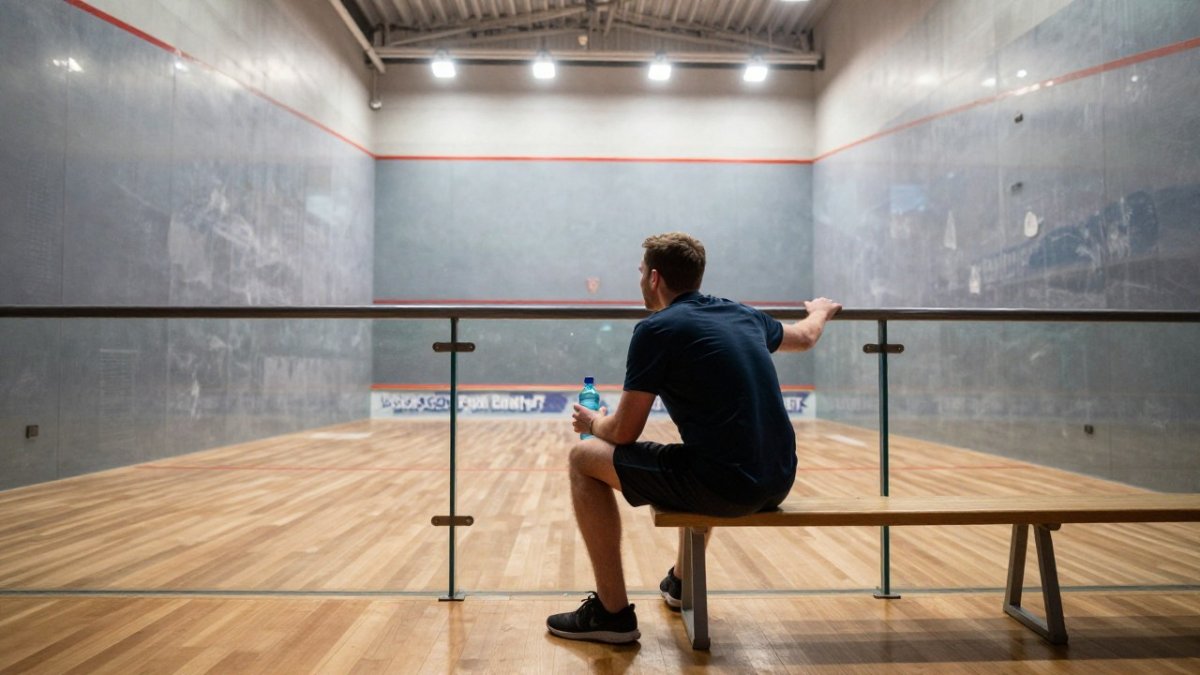
A squash facility centres on competition courts, often with glass back courts for viewing. The atmosphere is social and energetic, with scheduled sessions creating natural community interaction. Modern facilities use online booking systems for court reservations, removing the guesswork from securing a court. Launceston Squash Centre, for example, offers self-service access via a secure smartphone key through the SALTO app, with extended operating hours from 6am to 11pm daily. This setup means you book your court online and let yourself in when you arrive, no front desk required.
The Benefits of Squash for Weight Loss and Fitness
Most fitness comparisons stop at saying squash is 'high intensity.' To make a real decision, you need the numbers. While individual results vary based on weight, age, and effort, squash can be a highly effective calorie-burning activity. The key difference is not just the total burn, it is the structure of the effort.
Squash is interval training by design. A typical rally lasts 10-20 seconds of explosive movement, lunging, twisting, sprinting to the T-zone, followed by 10-15 seconds of active recovery between points. This repeated spike-and-recover pattern trains both your aerobic system (your heart and lungs) and your anaerobic system (short bursts of power). Over a 45-minute match, you might accumulate 20-30 minutes of high-intensity effort. On a treadmill, most people default to a steady-state pace, which builds endurance but does not trigger the same afterburn effect, the extra calories your body continues to burn post-workout as it recovers.
There is also a skill component that changes the effort equation. A beginner playing squash will move inefficiently, covering more ground per rally and burning more calories per point than an experienced player who anticipates shots and stays balanced. This means even a casual social game between two novices can produce a surprisingly high workload. As you improve, the intensity shifts from wasted movement to sharper, more deliberate bursts, which is why advanced players often add solo practice or gym sessions to maintain their conditioning.
The physical activity guidelines from the Australian Government Department of Health recommend adults accumulate 150 to 300 minutes of moderate-intensity physical activity each week. Squash sessions typically fall into the vigorous-intensity category, so the guideline suggests you need only 75-150 minutes of squash per week to meet the baseline (the WHO). That is roughly two to three matches. The practical advantage is adherence: a 2023 survey of Australian sports participants found that adults who play racquet sports are more likely to maintain their activity levels over a 12-month period compared to those who rely solely on gym memberships, largely because the social commitment and competitive element reduce dropout rates.
For weight loss specifically, the comparison is not just about calories burned during the session. Gym cardio is easy to skip or shorten when you are tired. A booked squash match has a start time and an opponent expecting you. That external accountability means you are more likely to complete the full session, week after week. Consistency, not peak intensity, is what drives long-term fat loss. If you can sustain two to three squash sessions per week and pair them with one or two gym strength sessions, you have a more balanced program than either option alone.
Pro Tip Track your effort, not just the clock. A 30-minute squash match can feel easier than a 30-minute run because the rallies break up the monotony, but your heart rate is often higher during those bursts. Use a heart rate monitor for a few sessions to see where your effort actually sits.
Comparing Membership Costs and Casual Court Hire Prices
Membership economics differ significantly between the two options. A 24 hour gym typically charges a monthly subscription covering unlimited gym floor access, with personal training and some classes as add-ons. Casual squash court hire prices vary by facility, time of day, and whether you are a member, with off-peak sessions generally costing less than peak hours.
The pricing model for squash memberships varies by facility, so it is worth checking current rates directly with your local centre. Launceston Squash Centre offers flexible membership options for both casual and frequent players, so you can pay per session without being locked into a subscription. For those who play once or twice a month with mates, casual booking works well. Dedicated enthusiasts who play several times weekly typically find membership better value.
Flexibility and Access: 24/7 Gyms vs Extended Court Hours
A 24 hour gym offers unmatched convenience: the facility is open every hour of the day, which is ideal for night shift workers or those who prefer 3am sessions. Squash facilities cannot match round-the-clock access, but many modern centres now offer extended hours that cover most working schedules. Launceston Squash Centre operates from 6am to 11pm daily, which accommodates early morning training and evening games comfortably.
The practical difference comes down to booking. A gym lets you walk in whenever you like. Squash requires planning: you book a court, confirm an opponent, and commit to a time. For some, that commitment is exactly what keeps them consistent. For others, the spontaneity of a gym suits an unpredictable schedule better. Consider your typical week honestly before deciding which access model you will actually use.
Racquetball Court Access in Northern Tasmania: A Local Look
For players seeking racquetball court access in northern Tasmania, options are limited compared to larger cities. Dedicated racquet sport facilities are fewer, which makes reliable access more valuable. A modernised facility with dependable booking systems and consistent court quality changes the experience entirely.
The Squash Australia club finder lists affiliated venues nationally, which helps locate community-based facilities offering structured play. When choosing where to play, look beyond the court itself. Check the booking system works smoothly, confirm the entry process is reliable, and assess whether the facility maintains its courts properly. Poor court maintenance, such as slippery floors or dead walls, ruins the experience regardless of price. A facility with new management and a genuine focus on player experience is worth prioritising.
Which Option Suits Your Goals, Schedule, and Budget?
The right answer depends on three filters: your experience level, your fitness goal, and your tolerance for planning. Here is how those filters play out in practice.
For Beginners: The Skill Barrier Question
If you have never played squash, the learning curve is real. You need to learn the basic rules, serving, the tin, the out lines, and develop enough racket control to sustain a rally. Most beginners spend their first few sessions chasing the ball rather than building fitness. A 24 hour gym has no skill barrier: you can walk in, set the treadmill to a comfortable pace, and start moving. This makes the gym the lower-friction option for someone who is completely new to structured exercise.
However, the barrier is not as high as many assume. Most squash facilities offer casual court hire that lets you play socially without a formal lesson. You can learn the basics from a friend or pick up a beginner's guide online. Within three to five sessions, most people can sustain a basic rally, and that is when the fitness benefits kick in. If you are the type who learns by doing rather than by reading a workout plan, the squash route may actually be easier to stick with.
For advanced athletes, the equation flips. A seasoned gym-goer who has plateaued on cardio machines will find squash offers a novel stimulus, rapid direction changes, hand-eye coordination, and reactive movement, that a treadmill cannot replicate. Conversely, an experienced squash player who wants to build upper-body strength or correct muscle imbalances will still need gym time. The two are complementary, not competing, for this group.
For Specific Goals: Strength, Endurance, or Skill
Muscle gain and strength: The gym wins outright. Squash builds lower-body power and core stability, but it will not meaningfully increase upper-body mass. If your primary goal is hypertrophy, you need progressive overload with weights.
Cardiovascular endurance: Both work, but differently. Steady-state gym cardio builds aerobic base efficiently. Squash builds a broader engine, aerobic and anaerobic, but requires skill to sustain long sessions.
Weight loss: Squash can be highly effective for adherence, but only if you can find regular opponents. Gym cardio can be more reliable if you travel frequently or have an unpredictable schedule.
Coordination and agility: Squash is superior. The sport demands footwork patterns, racket timing, and spatial awareness that no gym machine can train.
For Families and Social Players
Squash offers a unique multi-generational advantage. A parent and child can share a court, with the parent adjusting pace to keep rallies alive. This is harder to replicate in a gym, where age-appropriate equipment and supervision become factors. Many clubs also run junior programs and social leagues, which create a built-in community. If your goal is to model an active lifestyle for your children, squash provides a shared activity rather than parallel workouts.
The Planning Test
Ask yourself one honest question: if you book a court for Tuesday at 6pm, will you show up? If the answer is yes because you have committed to a mate, squash will keep you consistent. If the answer is 'probably, unless work runs late,' the 24/7 gym's walk-in model removes the risk of wasted bookings. There is no wrong answer, but there is a wrong fit for your personality.
Watch Out Do not underestimate the opponent problem. Squash requires a second player. If your regular partner moves away or loses interest, your workout routine collapses. Have a backup plan, join a club ladder, use a social booking app, or keep a gym membership as a fallback.
Conclusion
The right choice between a 24 hour gym and squash courts depends on whether you thrive on solitary discipline or competitive engagement. Gyms offer flexibility and equipment variety; squash offers structured, high-intensity play with a social dimension. For many, the answer is a mix: gym sessions for strength work, squash for cardio and fun.
If you are in northern Tasmania and want to test the squash option, Launceston Squash Centre makes it easy. With online court booking, secure smartphone entry via the SALTO app, and hours from 6am to 11pm daily, you can play on your own schedule without a front desk. Visit our website for current pricing and membership details and book your first session today.
Frequently Asked Questions
Is squash better than a 24 hour gym for weight loss?
Squash delivers a high-intensity interval training (HIIT) effect that can burn more calories per minute than steady-state cardio on gym machines. A typical solo session or competitive game keeps your heart rate elevated with bursts of sprinting and recovery. That said, weight loss depends on consistency. If you enjoy squash, you are more likely to play often. For the best results, many players combine court sessions with gym-based strength work.
Can a 24 hour gym provide the same muscle-toning benefits as squash?
Gym equipment is more effective for targeted muscle building because you can isolate specific muscle groups with progressive resistance. Squash builds functional strength, particularly in the legs, core, and shoulders, through dynamic movement and racquet swings. It tones muscles but does not replace a structured weights program. The ideal approach for overall fitness often involves using both: gym sessions for strength and court time for cardio, agility, and coordination.
How do casual squash court hire prices compare to a gym membership?
Casual court hire is typically paid per session, which suits players who use the court a few times a month. A monthly gym membership spreads the cost across unlimited access to equipment and classes. The right choice depends on how often you play. If you book a court once or twice weekly, casual hire may be economical. For frequent players, a squash membership with court access often provides better value per visit.
What is the advantage of self-service court access for busy professionals?
Self-service access removes the need to coordinate with staffed reception hours. A secure smartphone key lets you enter the facility and access your booked court directly. This suits professionals with irregular shifts, early starts, or evening commitments. You can book a court online in real time and arrive knowing your court is ready. The key is to confirm the facility's operating hours, as most squash centres, while flexible, are not open 24 hours.
Book Online

Comments